AboutEnterprise solutionsGet the app
Free walking tour · Plantage · Amsterdam

Walk Plantage,
your way.

Free Plantage walking tour - Hortus, Artis Zoo, Jewish Quarter, in 30 seconds

Your free walking tour of Amsterdam's cultural-and-memorial district - the 1638 Hortus Botanicus, the 1838 Artis Zoo (oldest in the Netherlands), the 1675 Portuguese Synagogue, the Jewish Cultural Quarter museums, the Hollandsche Schouwburg deportation memorial, Rembrandt House Museum, the National Holocaust Names Memorial. Pick a walk below or tell us a theme. Works offline, 9 voiced languages, 30 free minutes on signup.

Or pick your walk

Local knowledge

What we'd tell you on day one

Six things that change how you walk Plantage.

01

The Jewish Cultural Quarter combo ticket is the only sensible buy.

The Joods Cultureel Kwartier - the umbrella for the Jewish Quarter museums and memorials - sells a single €17.50 combination ticket valid for all four core sites for one calendar month: the Portuguese Synagogue (Mr. Visserplein 3, 1675), the Jewish Historical Museum (Jonas Daniël Meijerplein 2-4, opened 1987 in four converted 17th-century synagogues), the National Holocaust Museum (Plantage Middenlaan 27, opened 2024 in the former Hervormde Kweekschool teacher-training building), and the Hollandsche Schouwburg memorial (Plantage Middenlaan 24, the 1942-43 deportation centre). Each site individually is €12-€17, so the combo pays for itself if you do any two. Most visitors do the four in two half-days - the cultural-historical (Portuguese Synagogue + Jewish Museum) and the memorial (National Holocaust Museum + Hollandsche Schouwburg). Plan a Names Memorial visit in between (free, immediately south of Hollandsche Schouwburg).

02

The Hortus is the prettiest 90-minute visit in central Amsterdam.

The Hortus Botanicus (Plantage Middenlaan 2A) is one of the oldest botanical gardens in the world - founded 1638 as a medicinal-plants garden for the medieval Sint Antonieshof apothecaries. The garden covers 1.2 hectares with about 4,000 plant species. The architectural highlights: the Palmenkas (Palm Greenhouse, 1912-1920) - an Art Deco iron-and-glass conservatory with tropical and subtropical palms; the Driehoekskas (Three-Climates Greenhouse, 1993 by Zwarts & Jansma) with tropical, subtropical, and desert zones; the historic 1875 Orangerie (now houses the café). Many of the plants are 200-300 years old, brought back by the Dutch East India Company traders - the surviving 1648 cycad (a 380-year-old plant brought from the Cape Colony) is the oldest specimen in any European botanical garden. €12 ticket; daily 10:00-17:00. Allow 90 minutes minimum. The Orangerie café has the best lunch on the eastern Canal Ring.

03

Artis Zoo is heritage architecture as much as it is a zoo.

Artis (Plantage Kerklaan 38-40) is the oldest zoo in the Netherlands and one of the oldest in continental Europe, founded 1838. The full name - Natura Artis Magistra - is Latin for 'Nature is the teacher of Art', the educational-society motto that defined the institution's 19th-century purpose. The grounds cover 14 hectares (35 acres) with about 700 animal species. The visitor experience is half traditional-zoo and half heritage-architecture: many of the 19th-century animal houses survive as listed buildings (the 1875 Aquarium with the original cast-iron tanks, the 1882 Carnivora House with the lion enclosure, the 1928 Apenhuis monkey house). The Planetarium and Geological Museum are integrated into the zoo grounds. Modern conservation considerations have driven significant 2010s-20s renovations - the larger predator enclosures, the African savanna, the rainforest aviary. €27.50 adult ticket, €23.50 child, family bundles available; daily 09:00-18:00 (summer until 19:00). Allow 3 hours minimum. The Artis Library and Reading Room (free, in the Aquarium building) is a small but well-curated natural-history collection.

04

The Hollandsche Schouwburg memorial is the most-affecting Amsterdam site.

Plantage Middenlaan 24. A 19th-century theatre that the Nazis converted into the deportation centre for Amsterdam's Jewish community in 1942. About 80,000 Jewish residents were forced to register at the theatre, held there and in adjacent buildings for days or weeks, then deported by train to the Westerbork transit camp in the northeast Netherlands and from there to the extermination camps in occupied Poland. About 75% of Dutch Jews were murdered - the highest mortality rate in Western Europe (compared to 25% in France, 30% in Belgium, 65% in Germany). The Crèche opposite (Plantage Middenlaan 31-33, the children's day-care building) was used to hold Jewish children separately; the resistance operation that smuggled about 600 children out of the Crèche through 1942-1943 is one of the most-significant Dutch resistance stories. The theatre was preserved as a memorial after the war - the front facade and the courtyard are open as a free memorial; a wall of family names lines the inner courtyard. Open daily 11:00-17:00, free entry. The 2024 National Holocaust Museum next door provides the full historical context (€17.50, part of the Jewish Cultural Quarter combo).

05

The National Holocaust Names Memorial is the necessary visit.

Holocaust Namenmonument Nederland, Weesperstraat 105 - the memorial designed by Daniel Libeskind, opened 2021 after a 25-year campaign by Holocaust survivors and their families to physically inscribe the names of all 102,000 known Dutch Jewish, Sinti and Roma victims of the Nazi genocide. The memorial is a labyrinth of 4-metre-tall brick walls arranged in the shape of the Hebrew letters spelling 'In memory of' - each brick is inscribed with one name, date of birth, and age at death. The memorial extends across the full block; walking through is the canonical experience. The bricks are arranged by date of birth, so families and communities are sometimes scattered across the memorial - the random distribution is deliberate (the Nazi deportation system processed the names randomly; the memorial reflects that). About 5 minutes to walk briskly; 30-60 minutes if you stop to read the names. Free, open 24 hours. Located immediately adjacent to the Hollandsche Schouwburg memorial across Weesperstraat - visit them together as a single memorial-walk.

06

Brouwerij 't IJ is the post-walk drink.

Brouwerij 't IJ (Funenkade 7, at the eastern edge of the Plantage district immediately past Artis) is one of Amsterdam's most-famous craft breweries, housed in the De Gooyer windmill - a 1725 industrial windmill, one of the few surviving in central Amsterdam. The brewery was founded 1985 in the converted bathhouse next to the windmill; the windmill itself is still operational on grain-grinding (occasionally). The brewery produces about 15 beers (the Zatte tripel and the Natte dubbel are the classics). The tap-room serves the full range plus snacks; the outdoor terrace is one of the most-photogenic in Amsterdam (windmill in the background, beer in the foreground). Free entry to the tap-room; beers €5-€7. Daily 14:00-20:00; brewery tours Friday-Sunday at 15:30 (€11). The 15-minute walk from the Hollandsche Schouwburg through Plantage Kerklaan and past Artis is the canonical Plantage afternoon end.

How it works

How iWander walks Plantage with you.

Three things, in 30 seconds.

iWander home screen

01

Type your walk.

Any sight, theme or vibe. "Hortus Botanicus 380-year-old cycad", "Artis Zoo 19th-century animal houses", "Portuguese Synagogue 1675 + 1200 candles", "Jewish Cultural Quarter combo half-day", "Hollandsche Schouwburg + Crèche children rescue story", "Holocaust Names Memorial walk", "Rembrandt House 17c domestic studio". iWander writes you the walk in 30 seconds.

iWander audio walk in progress

02

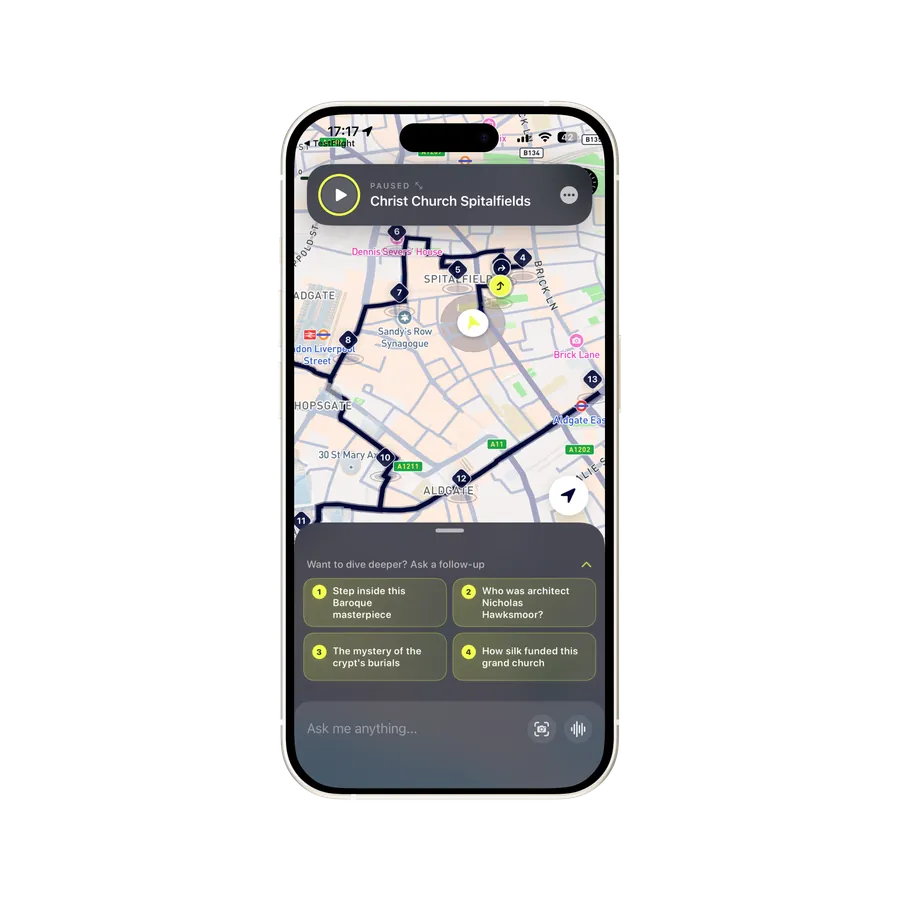
Hear the story as you walk.

The 1638 founding of the Hortus, the 16th-17th century arrival of Sephardic Jewish refugees fleeing the Inquisition, the 1675 Portuguese Synagogue, the 1639-1658 Rembrandt residence in Jodenbreestraat, the 1830s creation of Plantage as a wealthy-residential boulevard quarter, the 1838 founding of Artis, the 19th-century Jewish working-class community in the surrounding streets, the catastrophic 1940-1945 Nazi occupation and the Holocaust, the post-war recovery, the 1987 Jewish Historical Museum opening, the 2021 Names Memorial, the 2024 National Holocaust Museum.

iWander on-demand AI guide

03

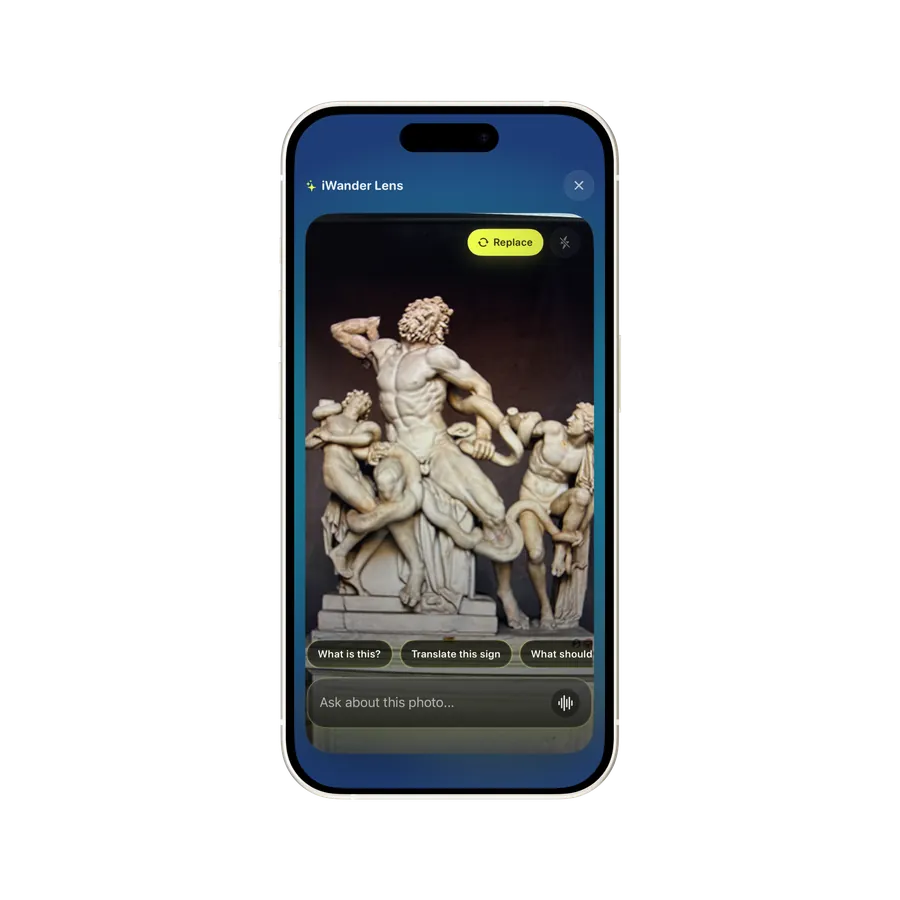
Ask anything along the way.

How old is the cycad? Which Rembrandt etching is on display? When was the synagogue built? Which Crèche children survived? Point your camera, ask out loud, or type. Your guide answers in seconds.

Works offline · 9 voiced languages · 30 free minutes on signup

What makes it worth walking

From 17th-century pleasure-garden plantation to the largest Jewish community in Western Europe to the Holocaust memorial district

Plantage is the most-layered district in central Amsterdam and the most-affecting to walk. The 17th-19th century cultural institutions (Hortus Botanicus, Artis Zoo) sit alongside the historic centre of the largest Jewish community in Western Europe (the Jodenbuurt, around Waterlooplein and Jodenbreestraat) and the memorial sites that commemorate the Holocaust destruction of that community. The Plantage is also where Rembrandt lived during the peak of his career, where the city's first public botanical garden was established, and where the contemporary Jewish Cultural Quarter has been built over the last 40 years. Walking the district takes a full day if you do it properly, with a heavy emotional weight in the memorial sites.

The 17th-century plantation

The name "Plantage" reflects the area's 17th-century origin as a "plantation" - a planned green quarter outside the medieval city walls, laid out 1682 with formal tree-lined boulevards and small plots for wealthy Amsterdam residents to build summer houses, formal gardens, and small farms (mostly for tobacco - a major Amsterdam commercial crop in the Dutch Golden Age). The street pattern is still visible: Plantage Middenlaan (the central east-west boulevard), Plantage Kerklaan, Plantage Doklaan, Plantage Muidergracht - all wide, tree-lined, formally laid-out streets that are noticeably different from the older Canal Ring or the working-class Jordaan.

The Hortus Botanicus moved to its current Plantage Middenlaan location in 1682 from an earlier site. The garden had been founded 1638 by the city as a medicinal-plants garden for the apothecaries and physicians of the Sint Antonieshof (the medieval city hospital). The relocation to Plantage gave the garden room to expand - by 1700 the Hortus housed about 4,000 species, many brought back from Asia, Africa, and the Americas by Dutch East India Company traders. The surviving 1648 cycad (a 380-year-old plant brought from the Cape Colony in 1648) is one of the oldest individual living plants in any European botanical garden.

Through the 18th and early 19th centuries Plantage remained relatively rural and quasi-residential. The 19th-century industrialisation pushed the residential population east into the area; by 1830 it was a major Amsterdam residential expansion zone. The Artis Royal Zoo was founded 1838 by the society Natura Artis Magistra ("Nature is the teacher of Art") on Plantage Kerklaan - one of the first public zoological gardens in Europe, deliberately educational in mission. The Hortus expanded its institutional infrastructure; the Plantage became Amsterdam's main cultural-and-recreational quarter through the 1840s-1870s. The Plantage Middenlaan tram-and-pedestrian-boulevard pattern survives largely intact today.

The Jewish Quarter

Amsterdam's Jewish community is one of the oldest and largest in continental Europe. The Sephardic (Spanish-Portuguese Jewish) community started arriving from the 1580s onwards - refugees fleeing the Spanish-Portuguese Inquisition that had progressively forced conversion and emigration of Iberian Jews since the 1492 Edict of Expulsion. Many of these refugees were nominally Catholic ("conversos") who returned to Judaism upon arriving in the relatively-tolerant Dutch Republic. The Sephardic community settled mostly around Jodenbreestraat and the immediate area east of the medieval city walls; the community thrived in the Dutch Golden Age commercial economy and built the Portuguese Synagogue 1671-1675 in a deliberately monumental brick-and-stone classical style by the architect Elias Bouman. The synagogue interior - 72 columns supporting the roof, 1,200 candles lit during evening services (no electric lighting, candle-only), wooden floors covered with sand, the original 17th-century furniture - all survive intact.

The Ashkenazi (German-Polish Jewish) community arrived through the 17th-19th centuries - mostly economic migration from the Holy Roman Empire and Polish-Lithuanian Commonwealth. The Ashkenazi community settled mostly around the Jodenbreestraat area as well; by 1700 they outnumbered the Sephardic community. The four 17th-century Ashkenazi synagogues - the Grote Synagoge (1671), the Obbene Sjoel (1685), the Dritt Sjoel (1700), the Neie Sjoel (1752) - were all built within a single block on Jonas Daniël Meijerplein, immediately west of the Portuguese Synagogue. The four buildings were preserved through WWII and converted 1985-1987 into the Jewish Historical Museum (Joods Historisch Museum) - the central institution of Amsterdam's Jewish cultural heritage.

By 1940 Amsterdam had about 80,000 Jewish residents in a city population of 800,000 - one of the largest Jewish communities in Western Europe. The community was concentrated around the Jewish Quarter (Jodenbuurt) immediately west of Plantage proper, but lived across the city. Rembrandt himself had lived in the Jewish Quarter on Jodenbreestraat 1639-1658 - the canal house at Jodenbreestraat 4 was the centre of his career, where he produced about 200 paintings, 200 etchings, and most of his major work. Rembrandt's neighbours were mostly Jewish merchants and rabbis; many of his portrait subjects were Jewish; some scholars argue his painting style was influenced by his Sephardic Jewish neighbours (though this is debated). Rembrandt went bankrupt 1656 and was forced to sell the house and its contents; the building was preserved and converted to a museum 1907-1911.

The Holocaust

The Nazi occupation of the Netherlands started May 1940. From October 1940 onwards Jewish residents were progressively excluded from professions, schools, and public spaces; from May 1942 the yellow star was required; from July 1942 the systematic deportations began. The Hollandsche Schouwburg theatre at Plantage Middenlaan 24 - a 19th-century theatre - was converted into the central deportation collection point. About 80,000 Amsterdam Jewish residents were forced to register at the theatre, held there and in adjacent buildings for days or weeks, then deported by train to the Westerbork transit camp in the northeast Netherlands and from there to the extermination camps in occupied Poland (mostly Auschwitz-Birkenau and Sobibor).

The mortality rate was the highest in Western Europe. About 75% of Dutch Jews were murdered - 102,000 of 140,000 total. The comparable figures: France 25% mortality, Belgium 30%, Italy 17%. The high Dutch mortality reflected several factors: the comprehensive Dutch civil-registration system (which made hiding much harder); the Nazi-aligned Dutch civil-service and police cooperation in the deportations (more efficient than in most occupied countries); the geographical position (no easy escape routes to Allied territory); and the relatively small size of the Dutch resistance (compared to Yugoslav, French, Polish resistance networks).

The Crèche opposite the Hollandsche Schouwburg (Plantage Middenlaan 31-33, the children's day-care building) was used to hold Jewish children separately - aged 0-12, awaiting deportation with their parents. The resistance operation that smuggled children out of the Crèche is one of the most-significant Dutch resistance stories. The director Henriëtte Pimentel, the staff (including Walter Süskind, the German-Jewish manager of the deportation centre who deliberately undercounted deportees to enable rescues), and Dutch resistance workers including Hanneke van Buuren, Truus Hesedahl, and the students of the nearby Hervormde Kweekschool teacher-training college (now the National Holocaust Museum building) coordinated the rescue of about 600 children from 1942-1943 by passing them out the back door of the Crèche into the Hervormde Kweekschool, then smuggling them out the school's other entrance to safe houses across the country. Pimentel was arrested and murdered at Auschwitz; Süskind was arrested 1944 and died in Auschwitz. Most of the smuggled children survived the war.

The post-war memorial landscape

Only about 5,000 Amsterdam Jewish residents returned from the camps. The pre-war Jewish Quarter was structurally damaged from the war and from the post-war "hunger winter" of 1944-1945 when starving Amsterdammers stripped abandoned Jewish houses for firewood. Much of the historic Jodenbuurt was demolished in the 1960s-70s as part of urban-renewal projects (the most controversial was the 1975 demolition of the old Nieuwmarkt-area Jewish housing for the metro line; the protests were a defining moment in Dutch urban politics).

The Hollandsche Schouwburg was preserved as a memorial after the war - the front facade and the courtyard were kept open as a free memorial site; the back of the theatre was demolished. The Jewish Historical Museum opened 1987 in the four converted 17th-century Ashkenazi synagogues - the first major institutional commemoration. The Portuguese Synagogue continues to function as an active Sephardic synagogue (one of the few in Europe to do so without interruption since the 17th century). The contemporary Jewish community of Amsterdam is about 18,000 people - a fraction of the pre-war 80,000.

The 2021 opening of the National Holocaust Names Memorial (Holocaust Namenmonument Nederland, Weesperstraat 105) by Daniel Libeskind was the result of a 25-year campaign by Holocaust survivors and their families to physically inscribe the names of all 102,000 Dutch victims. The memorial is a labyrinth of 4-metre brick walls in the shape of Hebrew letters spelling 'In memory of'; each brick is inscribed with one name, date of birth, and age at death. The 2024 National Holocaust Museum opened in the former Hervormde Kweekschool building - the same building used in the Crèche children-rescue operation - with the most-comprehensive Dutch-Holocaust historical exhibition in the country.

Walking the Plantage and Jewish Quarter as a single memorial-and-cultural walk - Hortus + Portuguese Synagogue + Jewish Historical Museum + Rembrandt House + Hollandsche Schouwburg + Names Memorial + National Holocaust Museum + Artis Zoo - takes a full day. The emotional weight is real; the heritage value is exceptional. Plan to end at Brouwerij 't IJ for the post-walk drink at the windmill terrace.

Questions

Frequently asked

The cultural-and-memorial district east of the Canal Ring. The name means 'plantation' - originally a 17th-century pleasure garden with tree-lined boulevards. By the 19th century a residential neighbourhood with the Hortus Botanicus (1638), Artis Zoo (1838), and (immediately west) the historic Jewish Quarter. Today contains the Jewish Cultural Quarter with the Portuguese Synagogue, Jewish Museum, National Holocaust Museum, and the Hollandsche Schouwburg deportation memorial.
A full walk - Hortus, Artis, Portuguese Synagogue + Jewish Museum, Rembrandt House, Hollandsche Schouwburg, National Holocaust Names Memorial - takes 4 to 5 hours. Many venues are full museum visits (Artis 3 hours, Hortus 90 min, Jewish Cultural Quarter 2.5 hours). Best as two half-days: cultural institutions and memorial sites.
Plantage Middenlaan 2A. One of the oldest botanical gardens in the world, founded 1638. 1.2 hectares, 4,000 species. Architectural highlights: Palmenkas (1912-20 Art Deco palm greenhouse), Driehoekskas (1993 three-climates greenhouse), the 1875 Orangerie café. The surviving 1648 cycad is the oldest specimen in any European botanical garden. €12. Daily 10:00-17:00.
Plantage Kerklaan 38-40. The oldest zoo in the Netherlands, founded 1838 by Natura Artis Magistra. 14 hectares, 700 species. Combines traditional animal exhibits with 19th-century heritage architecture (the 1875 Aquarium, 1882 Carnivora House, 1928 Apenhuis). €27.50 adult, €23.50 child. Daily 09:00-18:00 (summer until 19:00). Allow 3 hours minimum.
Mr. Visserplein 3. The 1675 Sephardic synagogue, built 1671-1675 by Elias Bouman. 72 columns supporting the roof, 1,200 candles lit during evening services (no electric lighting), wooden floors covered with sand. Still in active use for Sephardic Jewish worship. €17.50 Jewish Cultural Quarter combo. Sun-Thu 10-17, Fri to 14, closed Sat.
Umbrella name for four core sites: Portuguese Synagogue (1675), Jewish Historical Museum (1987 in four converted 17th-century synagogues), National Holocaust Museum (2024), Hollandsche Schouwburg memorial. €17.50 combo ticket valid for all four sites for one calendar month. Allow a full half-day to do them properly.
Plantage Middenlaan 24. A 19th-century theatre converted by the Nazis 1942-1943 into the deportation centre for 80,000 Amsterdam Jewish residents. The Crèche opposite was the children's holding centre; about 600 children were smuggled out by a resistance operation. About 75% of Dutch Jews were murdered. Memorial open daily 11-17, free entry.
Weesperstraat 105. The Daniel Libeskind 2021 memorial containing the names of all 102,000 known Dutch Jewish, Sinti and Roma victims of the Nazi genocide. A labyrinth of 4-metre brick walls in the shape of Hebrew letters spelling 'In memory of'; each brick inscribed with one name, date of birth, age at death. Free, open 24 hours.
Tram 14 runs along Plantage Middenlaan, 5-7 minutes from Central Station. Tram 7 covers the southern edge. Metro Waterlooplein (L51, L53, L54) for the western Jewish Quarter near the Rembrandt House. From Schiphol airport: train to Central (15-17 min, €5.65) + tram 14.

How to find it

Getting to Plantage

District
Centrum (Plantage + Jodenbuurt) · postal codes 1018, 1011
Trams
14 along Plantage Middenlaan (the main spine). 7 along Plantage Kerklaan. Both 5-10 min from Central Station
Metro
Waterlooplein (L51, L53, L54) for the western Jewish Quarter and Rembrandt House. Weesperplein (L51, L53, L54) for the Names Memorial
From Schiphol airport (AMS)
Train to Amsterdam Central (15-17 min, €5.65) + tram 14 east
Best season
Year-round. Hortus best April-October for outdoor garden; Artis best in summer for outdoor animals. Memorial sites best on grey days (the weather suits the weight). Avoid Holocaust Remembrance Day (4 May) and Yom HaShoah for crowds at the memorials
When to walk
Hortus daily 10-17. Artis daily 09-18 (summer 19). Portuguese Synagogue Sun-Thu 10-17, Fri to 14, closed Sat. Jewish Museum daily 10-17. National Holocaust Museum daily 10-17. Hollandsche Schouwburg daily 11-17. Names Memorial 24/7. Rembrandt House daily 10-18

The headline sights

Three landmarks to anchor your walk

Pull the audio walk around any of these and the rest of Plantage falls into place.

Hortus Botanicus + Artis Zoo

The two 17th-19th century cultural institutions that anchor Plantage. Hortus (Plantage Middenlaan 2A, founded 1638, one of the oldest botanical gardens in the world, 4,000 species, the surviving 1648 cycad, €12, daily 10-17). Artis (Plantage Kerklaan 38-40, founded 1838, oldest Dutch zoo, 14 hectares, 19th-century heritage animal houses, €27.50, daily 09-18). Two-minute walk between them.

Walk Hortus + Artis

Jewish Cultural Quarter (4 sites)

The €17.50 combination ticket covers four core sites for one calendar month: Portuguese Synagogue (Mr. Visserplein 3, 1675 Sephardic synagogue, 72 columns + 1,200 candles + sand floor); Jewish Historical Museum (4 converted 17th-century Ashkenazi synagogues); National Holocaust Museum (2024, in the former Hervormde Kweekschool); Hollandsche Schouwburg memorial (the 1942-43 deportation centre). Allow a full half-day.

Walk the Jewish Quarter

Rembrandt House + Holocaust Names Memorial

The 1639-1658 Rembrandt residence at Jodenbreestraat 4 - the canal-house where Rembrandt lived during the peak of his career, now a museum showing his studio, etching press, room of curiosities. €17.50, daily 10-18. And the 2021 Daniel Libeskind Holocaust Names Memorial at Weesperstraat 105 - a labyrinth of brick walls in the shape of Hebrew letters spelling 'In memory of', each brick inscribed with one of the 102,000 Dutch victims. Free, 24 hours.

Walk Rembrandt + Memorial

Other Amsterdam neighbourhoods to wander

Walk somewhere else in Amsterdam

Build any Plantage walk you want.

Tell us a theme, a question, a vibe - Hortus Botanicus 380-year cycad, Artis Zoo 19th-century animal houses, Portuguese Synagogue 1675 sand-floor service, Jewish Cultural Quarter combo half-day, Hollandsche Schouwburg + Crèche children rescue, Names Memorial walk, Rembrandt House - and your walk is ready in 30 seconds.

Get the iWander app

30 free minutes on signup · Subscriptions from $10/mo · Cancel anytime

Updated 21 May 2026 by the iWander local team · Curated for accuracy