AboutEnterprise solutionsGet the app
Free walking tour · Vatican & Prati · Rome

Walk the Vatican & Prati,
your way.

Free Vatican and Prati walking tour - St Peter's, Sistine, Castel, in 30 seconds

Your free walking tour of the world's smallest country and its surrounding Roman neighbourhoods - St Peter's dome, the Sistine Chapel, Castel Sant'Angelo, the Bernini angels of Ponte Sant'Angelo, Borgo's medieval lanes, Prati's living grid. Pick a walk below or tell us a theme. Works offline, 9 voiced languages, 30 free minutes on signup.

Or pick your walk

Local knowledge

What we'd tell you on day one

Six things that change how you walk the Vatican.

01

Book the Museums online, weeks ahead.

Walk-up tickets to the Vatican Museums (€17, no skip-the-line) involve queues of 2-3 hours in summer. Booked timed-entry tickets (€24) from museivaticani.va - the official site - cut that to 15 minutes. Book 4-8 weeks ahead for summer; 2 weeks ahead for shoulder season. Avoid third-party sites that mark up tickets. Save the QR code on your phone. Arrive 15 minutes before your slot. The website only sells tickets up to 60 days in advance.

02

St Peter's at 07:00 is empty.

The basilica opens at 07:00 (winter) or 07:00 (summer) and the first hour - 07:00-08:00 - is genuinely quiet. The security queue at the south side of the colonnade is short; you get the interior almost to yourself; the morning light through the dome oculus is at its best. By 09:00 the basilica is filling; by 11:00 it's busy; by 14:00 in peak season the security queue can be 60-90 minutes. The early-morning visit also gives you a head start on the dome climb (start at 08:30, finish at 09:30, before the climb-queue forms).

03

Friday and Saturday evenings are the secret.

From May to September the Vatican Museums run extended Friday and Saturday evening openings (typically 19:00-22:30, last entry 20:30). The same €24 ticket. The same Sistine Chapel and Raphael Rooms. Half the daytime crowd. The Cortile della Pigna and the Pinacoteca are properly walkable. The corridors are quiet enough to actually look at the sculpture. Book 3-4 weeks ahead - the slots sell out but less aggressively than the daytime ones.

04

Dress code: shoulders and knees covered.

The Vatican basilica and Sistine Chapel both enforce a strict dress code - shoulders covered (no vest tops, tank tops, off-shoulder dresses); knees covered (no short shorts, no mini-skirts); no plunging necklines. The dress code applies to everyone, all ages. They will turn you away at the security line, no exceptions. The Vatican has a shop opposite the entrance selling cheap cotton shawls (€10) if you've forgotten - bring your own from home to save the trip back to the hotel.

05

The dome climb is worth it.

The cupola climb takes you 137 metres above St Peter's Square - one of the best free-or-cheap panoramic views of Rome. Two options: full climb (320 steps, €8) or lift-to-the-basilica-roof + 231 steps to the top (€10). The lift saves you 89 steps but you can't avoid the final 231 in the narrowing dome shaft (which becomes claustrophobic - the walls slope inwards because you're literally climbing inside the dome's double-shell construction). Allow 60-90 min including queue. Avoid if claustrophobic.

06

Lunch in Prati, not the Vatican area.

The restaurants and pizzerias on Via della Conciliazione, around St Peter's Square, and along Borgo Pio are mostly tourist-priced and indifferent. The good Roman food is 10 minutes east in Prati: Pizzarium (Via della Meloria 43 - Gabriele Bonci's pizza al taglio, the city's most-famous - queue 15-30 min) for lunch by the slice. L'Arcangelo (Via Giuseppe Belli) or Settembrini (Via Luigi Settembrini) for proper cucina romana. The Mercato Trionfale (Via Andrea Doria, 270 stalls, daily 07:30-14:00) for fresh produce and lunch counters.

How it works

How iWander walks the Vatican with you.

Three things, in 30 seconds.

iWander home screen

01

Type your walk.

Any monument, theme or vibe. "St Peter's at sunrise", "Sistine Chapel ceiling", "Castel Sant'Angelo + Passetto", "Ponte Sant'Angelo Bernini angels", "Prati pizza". iWander writes you the walk in 30 seconds.

iWander audio walk in progress

02

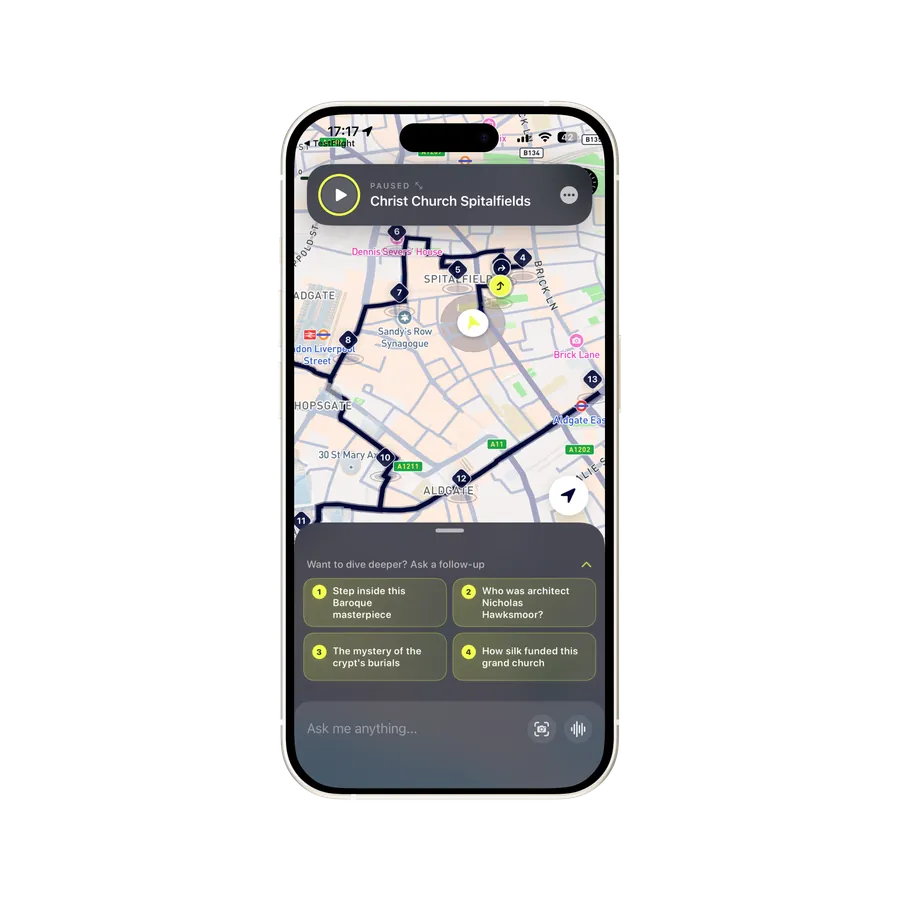
Hear the story as you walk.

St Peter crucified on this hill 64 AD, Constantine's basilica 320s, the medieval Vatican, Michelangelo's Sistine work 1508-1512, Bernini's St Peter's Square 1656-1667, the 1929 Lateran Treaty creating Vatican City, the 1936-1950 Conciliazione cut, today's papacy.

iWander on-demand AI guide

03

Ask anything along the way.

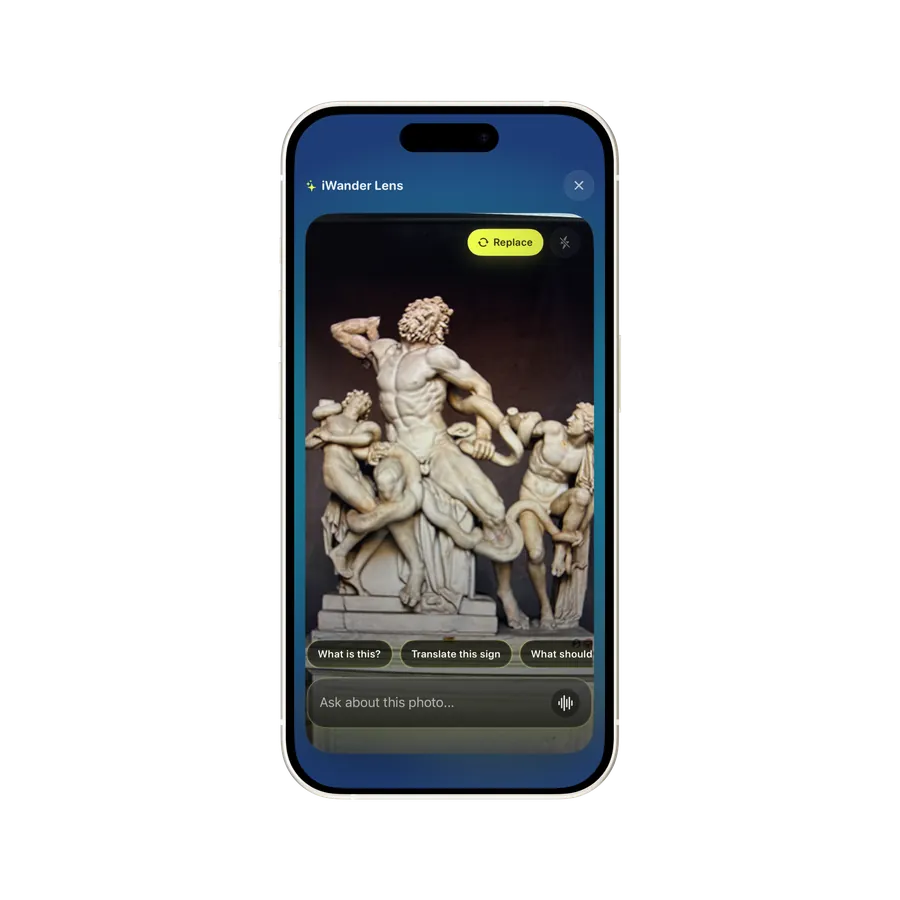
Which Pope? Which sculpture? When was that finished? Point your camera, ask out loud, or type. Your guide answers in seconds.

Works offline · 9 voiced languages · 30 free minutes on signup

What makes it worth walking

A sovereign state, a 1,700-year-old basilica, and a planned 19th-century neighbourhood holding it all together

The Vatican is the only neighbourhood in the world that is also a sovereign country. 0.49 square kilometres of land - smaller than the Mall in Washington, smaller than a typical golf course - is the headquarters of the Catholic Church and the world's smallest internationally-recognised state. About 825 people hold Vatican citizenship; about 6.8 million visit the Museums every year. Walk the neighbourhood and you are walking through an unusual combination: the Christian Church's organisational centre, the largest single concentration of Renaissance and Baroque art in the world, and (across the river to the east) a perfectly ordinary middle-class Roman neighbourhood that grew up to support the visitors.

From Roman cemetery to Constantine's basilica

The Vatican Hill was, in Roman times, the marshy west-bank outskirts of the city - a chariot-racing circus (the Circus of Caligula, on which Nero later persecuted Christians), a cemetery, the gardens of imperial estates. Saint Peter was crucified upside-down in the Circus around 64 AD (during Nero's persecution after the Great Fire of Rome) and reportedly buried in the adjacent cemetery. The community of early Christians maintained the burial site as a shrine.

The Emperor Constantine - having converted to Christianity in 312 AD - levelled the Vatican cemetery and built a basilica directly over Peter's tomb between 319 and 333 AD. The Old St Peter's was the largest church in Christendom for over a thousand years - 110 metres long, with a coffered nave ceiling, marble columns recycled from earlier Roman buildings, and the tomb of Peter directly under the high altar. The basilica was the centre of Western Christianity through the medieval period.

The new basilica, 1506-1626

By 1500 the Old St Peter's was crumbling. Pope Julius II decided to demolish it and build a new basilica in the Renaissance style. The architects came one after another: Bramante (1506-1514) designed the Greek-cross plan; Raphael (1514-1520) modified it; Michelangelo (1546-1564, in his 70s and 80s) returned to Bramante's vision and designed the dome; Carlo Maderno (1606-1612) extended the nave to the Latin-cross form and designed the facade; Bernini (1626-1680) added the interior fittings - the Baldacchino, the Chair of Peter, the side chapels, and the great St Peter's Square colonnade outside.

The basilica was consecrated in 1626. It is the largest church in Christendom (15,160 sq m of interior, capacity 60,000+) and contains some of the most important Renaissance and Baroque art in the world: Michelangelo's Pietà (1499, the only sculpture he ever signed - the signature is on the strap across the Virgin's chest); Bernini's Baldacchino (1623-1634, the 28-metre bronze canopy over the high altar); the Chair of Saint Peter (Bernini, 1647-1653, gilded bronze chair enclosing a 6th-century wooden relic); the dome ceiling mosaics (1605-1612, designed by Cavalier d'Arpino); and 91 marble tombs of popes from Saint Peter to Benedict XVI.

The Vatican Museums and the Sistine Chapel

The Vatican Museums - 7 km of corridors, 70,000 works on display from a collection of 200,000 - grew from the papal collections of antiquities and Renaissance art accumulated over 500 years. The Sistine Chapel - built 1473-1481 under Sixtus IV - is the most-famous space: Michelangelo's ceiling (1508-1512) covering 500 square metres with the Genesis cycle and Old Testament prophets, and the Last Judgement (1536-1541, painted by Michelangelo in his 60s on the altar wall, depicting the Second Coming of Christ at the centre with the damned tumbling down on the right and the saved rising on the left).

The Vatican Museums also hold the Raphael Rooms (the apartments Raphael frescoed for Julius II 1508-1514, including the "School of Athens" - Plato and Aristotle walking together, surrounded by other ancient philosophers, with Raphael's contemporaries' faces inserted; Bramante is Euclid, Michelangelo is Heraclitus brooding in the foreground), the Pinacoteca (the gallery of paintings - Caravaggio, Giotto, Raphael's Transfiguration), the Egyptian and Etruscan museums, and the Pio-Clementine sculpture gallery (the Laocoön group, the Apollo Belvedere, the Belvedere Torso).

The 1929 Lateran Treaty and Vatican City

For most of the medieval and Renaissance periods the Pope was both a spiritual leader and a temporal ruler - the Papal States covered much of central Italy. The 1870 unification of Italy ended the Papal States; the Pope retreated to the Vatican and refused to recognise the Italian state. The standoff lasted 59 years. In 1929 Pius XI and Mussolini negotiated the Lateran Treaty, which created Vatican City as a sovereign state, recognised Italian sovereignty over the rest of the former Papal States, and made Catholicism the official Italian religion (until the 1984 revision of the Concordat removed that clause). Vatican City has been a sovereign state since.

Today Vatican City has its own postage stamps, currency (the Euro since 2002, with Vatican-design coins), passport (the smallest issuance of any state), gendarmerie, fire brigade, supermarket, pharmacy, and railway station (one platform, used about once a year). The Swiss Guards - the volunteer Swiss soldiers who have protected the Pope since 1506 - wear the colourful uniforms (allegedly designed by Michelangelo but probably not) at all public ceremonies. The Pope himself - currently Pope Leo XIV (elected May 2025, the first American Pope) - holds public audiences in St Peter's Square on Wednesdays at 09:30 (free, ticket required).

Castel Sant'Angelo and the Passetto

The cylindrical fortress on the west bank of the Tiber was built 134-139 AD as the mausoleum of the Emperor Hadrian (the same Hadrian who built the Pantheon). Hadrian's ashes were placed in the central chamber; his successor Antoninus Pius added a temple on top. The building was converted into a papal fortress in the medieval period - the Aurelian Walls were extended to include it, and the Passetto di Borgo (a fortified covered walkway, 800 metres long, raised above the street) was built linking the Vatican to the Castle so that popes could flee here in case of attack on the Vatican.

Pope Clement VII used the Passetto in May 1527 during the Sack of Rome - the Holy Roman Emperor Charles V's mutinous army of Spanish and German mercenaries attacked Rome; the Pope escaped from the Vatican to the Castel via the Passetto and held out there for over a month while the army looted the city. The Castel later became a prison; Benvenuto Cellini (the goldsmith and sculptor) was imprisoned here. Today it's a museum with the Roman-era spiral ramp, the papal apartments (including Pope Paul III's beautifully-frescoed rooms), the prison cells, and a roof terrace with a 360° Rome panorama. €15 entry. The Ponte Sant'Angelo in front of the Castle - originally Hadrian's funerary bridge from 134 AD - was given its current decoration in 1669 with ten angel statues designed by Bernini.

Borgo and Prati

The Borgo - the medieval neighbourhood between the Vatican and the river - was densely populated through the medieval and Renaissance periods, full of religious houses, hospitals for pilgrims and small shops catering to the visitor trade. In 1936 Mussolini ordered a broad new road - the Via della Conciliazione, named for the 1929 Lateran Treaty - cut through the medieval Borgo to give St Peter's a "proper" monumental approach. The demolitions destroyed several streets and significantly changed the approach to the basilica (architects had previously argued for keeping the surprise of emerging suddenly into St Peter's Square through a narrow medieval lane). The Borgo Pio and Borgo Vittorio streets running parallel to the Conciliazione survived; they are mostly tourist restaurants now.

Prati - the neighbourhood north and east of the Vatican, between Via Cola di Rienzo (south) and the Tiber (east) - was developed 1880s-1920s for the new Italian state's civil servants. The grid is rectilinear, the buildings late-19th-century apartment blocks with Liberty-style detail, the streets wide and tree-lined. The Mercato Trionfale food market (Via Andrea Doria, 270 stalls, daily mornings) anchors the food scene. Pizzarium - Gabriele Bonci's pizza-by-the-slice institution at Via della Meloria 43 - is a 10-min walk from the Vatican. Prati is the easiest neighbourhood for visitors who want to stay near the Vatican but in a real Roman residential setting; hotels here are €30-80/night cheaper than the Trevi quarter.

Questions

Frequently asked

Vatican City is the world's smallest sovereign state (0.49 sq km), entirely surrounded by Rome. It is the headquarters of the Catholic Church, the residence of the Pope, and home to St Peter's Basilica (Catholicism's largest church), the Vatican Museums (which contain the Sistine Chapel), the Vatican Gardens, and the Vatican Library. About 6.8 million tourists a year visit the Museums alone.
A focused Vatican visit (St Peter's Basilica + Vatican Museums + Sistine Chapel, with the queues factored in) is 6-8 hours. A wider walk including Castel Sant'Angelo, Ponte Sant'Angelo, the Borgo medieval quarter and a Prati lunch stretches to a full day (10 hours). The Vatican Museums alone are 7 km of corridors. Allow 90 minutes for St Peter's Basilica. The dome climb adds 60 minutes.
Book a timed-entry ticket online at museivaticani.va - the official site - up to 60 days in advance. Skip-the-line tickets are €24 (vs €17 walk-up); the time you save can be 2 hours during peak summer. Free entry the last Sunday of every month (no queue-skip; queues are 3-4 hours). For Sistine Chapel only access, no separate ticket - it's included with general admission.
Yes - entry to the basilica is free. Security queues to enter the building can be 30-60 minutes at peak; arrive before 08:00 (when the basilica opens) for the shortest queue. The Vatican Grottoes underneath (where the popes are buried) are also free. The Necropolis below the Grottoes requires a separate booking (€13, 6-week wait, age 15+ only). The dome climb costs €10 (320 steps) or €8 (lift + 320 steps).
A cylindrical fortress on the west bank of the Tiber, built 134-139 AD as the mausoleum of the Emperor Hadrian. Used as a papal fortress, a prison and a residence from the medieval period onwards; popes fled here during sieges via the Passetto di Borgo. Inside: the papal apartments, the prison cells, the Roman-era spiral ramp leading up. The roof terrace has a 360° Rome view. €15 entry; open daily 09:00-19:30.
Prati is the neighbourhood east and north of the Vatican - a planned late-19th-century grid of streets, very different from the medieval Borgo or the Renaissance centro storico. Built 1880s-1920s for the new Italian state's civil servants and middle class. Today it's one of Rome's most pleasant residential quarters - wide streets, Liberty-style apartment buildings, family-run restaurants, the Via Cola di Rienzo shopping spine, the Mercato Trionfale food market.
The medieval neighbourhood immediately east of St Peter's Square. The narrow streets that ran here for centuries were partially demolished in 1936-1950 when Mussolini ordered the broad Via della Conciliazione cut through. But the streets either side - Borgo Pio, Borgo Vittorio, Via dei Corridori - survive with their original medieval-and-Renaissance houses, the Passetto di Borgo (the Pope's escape route) running above them.
Metro: Ottaviano (Line A) is the closest to the Vatican Museums entrance (5 min walk south). Cipro (Line A, one stop further) is closer to the residential Prati area. Walk: cross the Ponte Sant'Angelo from the centro storico (15-20 min from Piazza Navona). Bus: 64 or 40 from Termini. From Fiumicino take the Leonardo Express to Termini then metro A to Ottaviano (50 min).

How to find it

Getting to the Vatican

Sovereign state
Vatican City (0.49 sq km). The surrounding Prati neighbourhood is in Rome
Nearest metro
Ottaviano (Line A) for Museums entrance; Cipro (Line A) for residential Prati
From Fiumicino
Leonardo Express to Termini, metro A to Ottaviano (50 min) · about €17
From Ciampino
Cotral bus to Anagnina, metro A to Ottaviano (75 min) · about €11
Best season
April-June and September-October. July-August hot + crowded. Closed: Sundays except last of month, religious holidays. Free last Sun of month (queues are intense)
When to walk
St Peter's at 07:00. Museums booked online 4-8 weeks ahead. Fri-Sat evening openings May-Sep. Dome climb 09:00. Pizzarium 12:30 for lunch

The headline sights

Three landmarks to anchor your walk

Pull the audio walk around any of these and the rest of the Vatican falls into place.

St Peter's Basilica

Catholicism's largest church. 1506-1626 construction (Bramante, Raphael, Michelangelo, Maderno, Bernini). Free entry. Michelangelo's Pietà (1499), Bernini's Baldacchino (1623-34), the dome climb (€8-10). Open daily 07:00-19:00 (winter 18:00). Dress code: shoulders + knees covered.

Walk the basilica

Vatican Museums + Sistine Chapel

7 km of corridors. €24 timed-entry online (museivaticani.va) - book 4-8 weeks ahead. Sistine ceiling (Michelangelo 1508-12, Last Judgement 1536-41). Raphael Rooms. Pio-Clementine sculpture gallery (Laocoön). Pinacoteca. Closed Sundays except last of month.

Walk the Museums

Castel Sant'Angelo

Hadrian's mausoleum (134-139 AD), then papal fortress + prison. Connected to the Vatican by the Passetto di Borgo (the Pope's escape route, used by Clement VII in 1527). Papal apartments, prison cells, Roman spiral ramp, roof terrace with 360° view. €15. Daily 09:00-19:30.

Walk the Castel

Other Rome neighbourhoods to wander

Walk somewhere else in Rome

Build any Vatican walk you want.

Tell us a theme, a question, a vibe - St Peter's at 07:00, the Sistine ceiling, the dome climb, the Passetto escape route, a Prati pizza lunch - and your walk is ready in 30 seconds.

Get the iWander app

30 free minutes on signup · Subscriptions from $10/mo · Cancel anytime

Updated 19 May 2026 by the iWander local team · Curated for accuracy