AboutEnterprise solutionsGet the app
Free walking tour · Monti · Rome

Walk Monti,
your way.

Free Monti walking tour - Madonna dei Monti, Boschetto, Moses, in 30 seconds

Your free walking tour of Rome's first rione - the bohemian residential quarter next to the Colosseum, where Caesar grew up, Michelangelo carved Moses, and the locals drink wine on the steps of a 1581 church. Pick a walk below or tell us a theme. Works offline, 9 voiced languages, 30 free minutes on signup.

Or pick your walk

Local knowledge

What we'd tell you on day one

Six things that change how you walk Monti.

01

The Moses is one of the world's great sculptures.

San Pietro in Vincoli - the church on Piazza di San Pietro in Vincoli, a 5-min walk uphill from the Colosseum - holds Michelangelo's Moses (1513-1515), the central figure of the unfinished tomb of Pope Julius II. Originally Michelangelo conceived a free-standing tomb with 47 figures; the project was cut back over 40 years to the small wall-tomb you see now (with only Moses + two minor figures actually Michelangelo's hand). Moses sits central, holding the tablets of the Law, with the famous "horns" (a Vulgate translation error: cornuta in Latin can mean both "horned" and "shining"). Free entry; €1 in the lighting meter. The custodian on duty enforces silence.

02

Madonna dei Monti piazza is the local evening.

Piazza della Madonna dei Monti - the small piazza on Via dei Serpenti - is where Monti's residents drink in the evening. From 19:00 onwards in any season the piazza fills: students from the nearby university, the bohemian residents, a few tourists who've stumbled in. People sit on the steps of the 1581 church (officially you can't but informally everyone does), drink €5 spritzes from the surrounding bars (Ai Tre Scalini at Via Panisperna is the institution; La Bottega del Caffè is the modern option), and the talk flows in Romanesco. The piazza is a 4-minute walk from Cavour metro - the easiest way to taste the real Monti.

03

Via dei Serpenti + Via del Boschetto for the shopping.

Monti's vintage and indie-designer strip is dense and unusually high-quality for Rome (a city that's not generally known for fashion-shopping). Pifebo at Via dei Serpenti 137 is the largest vintage shop (€30-150). Le Gallinelle at Via dei Serpenti 200 specialises in reworked vintage. Tina Sondergaard at Via del Boschetto 1 (Danish-Roman designer; couture-level dress prices). Joseph Debach at Via del Boschetto 88 for handmade leather shoes. Most open Tue-Sat 11:00-19:30, closed Mondays. Cash and card both accepted.

04

Mercatino Monti is small and curated.

The weekend craft market - Mercatino Monti, in the courtyard of the Hotel Palazzo Manfredi (Via Leonina 46) - runs Saturdays and Sundays 10:00-20:00 (closed Aug). About 50-70 stalls of local Roman designers, vintage, handmade jewellery, prints, ceramics, books. Smaller and more curated than Porta Portese; prices €15-200. The market opened in 2009 and has been the heart of Monti's hipster identity since. Bring a tote bag; vendors usually don't have bags.

05

The Colosseum back-approach.

Most tourists approach the Colosseum from Via dei Fori Imperiali (north) or from Colosseo metro (south-east). The under-used third approach is from Monti: walk south down Via degli Annibaldi or Via degli Ibernesi from Cavour metro - you'll skirt the Forum on your left, the Esquiline Hill on your right, and arrive at the Colosseum from the west side with no tourist crush. The route also gives you a different first view of the Colosseum (from above and behind the Arch of Titus). 10-minute walk from Cavour metro to the Colosseum ticket gates.

06

Trattoria Monti is the special-occasion booking.

Trattoria Monti (Via di San Vito 13a) has one Michelin star and serves modernised cucina romana - cacio e pepe with a perfect crispy parmesan crust, fritto misto with seasonal vegetables, abbacchio (spring lamb) with rosemary. About €60-80 per person; book at least 2 weeks ahead. For everyday: Antica Birreria Peroni (Via di San Marcello 19 - the 1906 Peroni-brewery beerhall, hearty Roman food at €25-35 per head; queue 30 min Fri-Sat dinner). La Carbonara (Via Panisperna 214) for the canonical Roman pasta dishes; Urbana 47 (Via Urbana 47) for design-bistro lunch.

How it works

How iWander walks Monti with you.

Three things, in 30 seconds.

iWander home screen

01

Type your walk.

Any street, theme or vibe. "Madonna dei Monti evening", "Michelangelo's Moses", "Via del Boschetto vintage", "Trajan's Forum from Monti", "Suburra ancient lanes". iWander writes you the walk in 30 seconds.

iWander audio walk in progress

02

Hear the story as you walk.

Caesar's childhood in the Suburra, Nero's 64 AD Golden House, Trajan's Forum and Markets, the medieval narrowing of the streets, Michelangelo's 40-year struggle with the Julius II tomb, the 1881 cutting of Via Cavour, today's bohemian Monti.

iWander on-demand AI guide

03

Ask anything along the way.

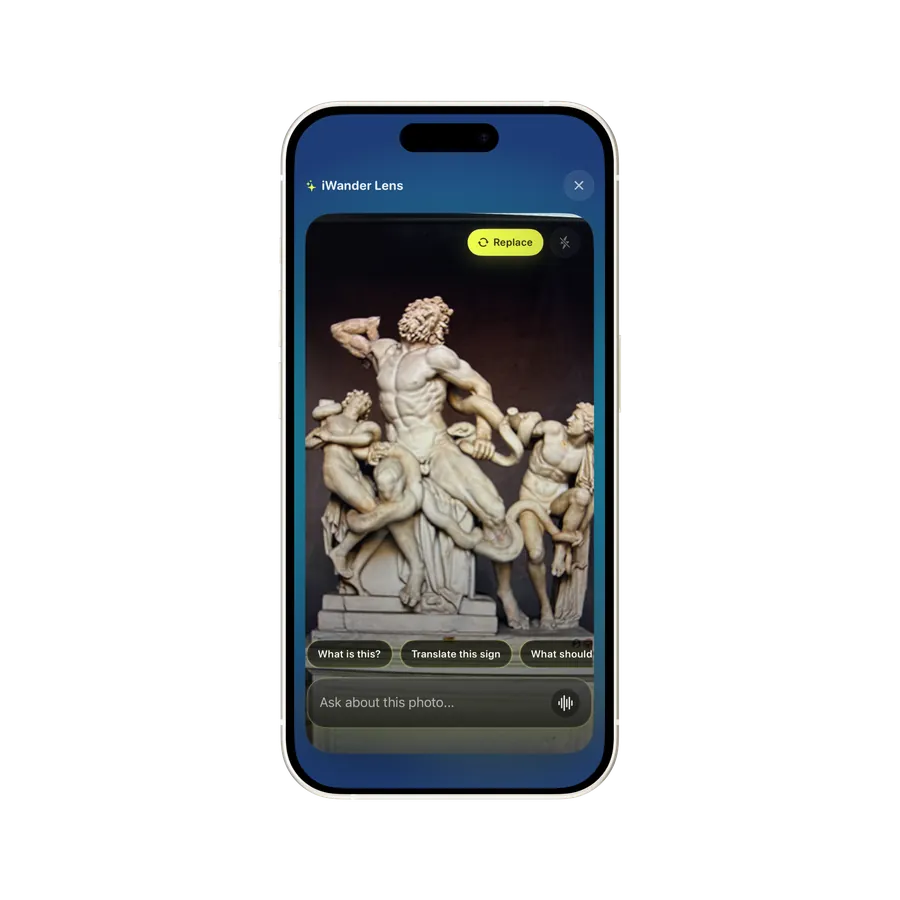
Which church? Whose tomb? Which trattoria? Point your camera, ask out loud, or type. Your guide answers in seconds.

Works offline · 9 voiced languages · 30 free minutes on signup

What makes it worth walking

Rome's oldest residential neighbourhood, still residential, 2,000 years later

Monti is the most unusual Roman neighbourhood for visitors because it sits directly next to the Colosseum and the Forum - the most-touristed monuments in Italy - and is mostly indifferent to them. The locals shop on Via dei Serpenti, drink on the steps of Madonna dei Monti, eat at Trattoria Monti, and walk past the Forum twice a day without much notice. The neighbourhood has been residential for two millennia. The ancient Suburra was here in Republican times. The medieval Monti was here through the Middle Ages. The 19th-century Monti was here under the Kingdom of Italy. The current bohemian Monti was here through the 1990s and 2000s. The continuity is the unusual part.

The Suburra: Caesar's neighbourhood

In Republican Rome the Suburra district - which corresponded roughly to modern Monti, plus parts of the Esquiline Hill - was the city's densely-populated working-class quarter. The streets were narrow, the buildings (insulae) tall and unstable, the population a mix of plebeians, freed slaves, immigrants from across the empire, prostitutes, gangsters, the urban poor. Cicero called it "the most crowded district in Rome". Juvenal wrote satires about its noise and squalor. The Suburra ran from the foot of the Capitoline Hill (where it met the more respectable Forum) up the slopes of the Esquiline and Viminal hills.

Julius Caesar was born and raised in the Suburra (his family had a house on the western slope of the Esquiline, near the modern Piazza Madonna dei Monti). The Caesar family - despite their patrician status - had financial trouble through the late Republic and were living modestly in this working-class quarter when Caesar was a boy. The biographer Suetonius noted this: that Caesar's path from the Suburra to the Palatine Hill (where, as dictator, he eventually lived) was the path from the working class to the ruling class. The character of the modern Monti - mixed-class, residential, working - still preserves something of that 2,000-year-old Suburra identity.

Nero's Golden House

After the Great Fire of Rome in 64 AD - which devastated 10 of the city's 14 districts including the Suburra - the Emperor Nero seized about 200 acres of the burned-out land (between the Palatine and Esquiline hills) and built the Domus Aurea, the "Golden House". This was a vast palace complex (about 150 rooms identified so far, with more being excavated), decorated with gold leaf, painted frescoes, a revolving banqueting hall with a celestial-themed ceiling, and surrounded by parks with an artificial lake (where the Colosseum would later stand).

Nero's successors (Vespasian, Titus, Domitian, then Trajan) systematically destroyed the Domus Aurea after his suicide in 68 AD - filling rooms with rubble, building public baths on top (the Trajan Baths), and giving the land back to the city. The artificial lake was drained and the Colosseum built in its place (which is why the Colosseum is called the Colosseum - it was near Nero's giant "Colossus" statue, which was demolished later). The Domus Aurea was rediscovered in the late 15th century when Renaissance artists - Raphael, Pinturicchio, Michelangelo - lowered themselves through holes in the ceiling to copy the frescoes, which they called "grotesques" because the rooms were underground "grotte". The grotesque style spread through Renaissance art from these copies.

Today the Domus Aurea is open for guided tours only (€20, 75 min, book 2-4 weeks ahead at coopculture.it). The tour walks through a dozen excavated rooms; a VR headset shows what the painted ceilings looked like. One of the most extraordinary visits in Rome, far less crowded than the Colosseum next door.

Trajan's Forum and Trajan's Markets

The 112 AD Trajan's Markets - on the slope of the Quirinal Hill where it meets Monti - are sometimes called "the world's first shopping mall". The complex - six floors of brick-faced shops, offices and warehouses, designed by Apollodorus of Damascus - housed about 150 individual shops selling everything from fish to silk to wine. The arched main hall is mostly intact; you can walk through it. The adjacent Trajan's Forum (113 AD) included the Trajan Column - the 30-metre marble column depicting Trajan's two Dacian wars in spiralling relief, with about 2,500 figures carved across 200 metres of bas-relief. Both are part of the Imperial Forums archaeological zone; €16 ticket combines them with the Roman Forum and Colosseum.

The medieval and Renaissance Monti

From the 6th century onwards Monti was depopulated as Rome shrank - the aqueducts had been cut by the Gothic Wars, the upper-city water supply failed, the population retreated towards the Tiber. The Esquiline Hill became a region of gardens, vineyards, and isolated churches. Through the medieval period the neighbourhood was thinly populated; the great basilica of Santa Maria Maggiore (on the eastern edge of modern Monti) anchored the religious community.

The Renaissance brought back density. Popes Sixtus IV and Sixtus V rebuilt Monti's churches and streets in the 1470s-1590s. Madonna dei Monti (1581) was built as a parish church for the rebuilt neighbourhood; the fountain in front (1589, by Giacomo della Porta) was part of the same urban-renewal programme. San Pietro in Vincoli - the church holding Michelangelo's Moses (1515) - had been here since the 5th century; it was renovated in the Renaissance to receive the Julius II tomb commission.

The 19th-century cutting

Rome became the capital of unified Italy in 1871, and the new state was determined to modernise the city. Via Cavour - the broad new boulevard cutting from Termini station to the Forum - was driven through the medieval heart of Monti in 1881-1888. The cutting destroyed several medieval streets and reshaped the neighbourhood's geometry. The new street brought traffic but also new residents - civil servants for the Italian state, who moved into the rebuilt apartment blocks on Via Cavour and Via dei Serpenti. The neighbourhood became middle-class through the early 20th century.

The 20th century and the artists

Through the 20th century Monti remained a residential, mixed-class neighbourhood - middle-class on Via Cavour, working-class on the side streets, increasingly a destination for university students from the nearby La Sapienza and Roma Tre. Pier Paolo Pasolini lived briefly on Via Panisperna in the 1950s. The 1980s and 1990s saw an influx of artists and designers who could no longer afford Trastevere; the modern bohemian Monti dates from this period. The neighbourhood retains a notable population of working artists, fashion designers, film-industry technicians, and the kind of small architectural practice that the rest of the centro storico has priced out.

The 2009 opening of Mercatino Monti (the weekend craft market at the Hotel Palazzo Manfredi) consolidated the indie-design identity. The vintage strip on Via dei Serpenti developed through the 2000s and 2010s. The cluster of small bistros and bars around Piazza Madonna dei Monti is the latest layer. Through all this the residential population has held - Monti is one of the few central Roman neighbourhoods where ordinary working-and-middle-class families still live alongside the tourist economy. The neighbourhood is one of the few in central Rome where a 60-something Italian grandmother might be your shop-counter neighbour at the bar. The continuity, from the Suburra to today, is the unusual part.


Questions

Frequently asked

Monti is Rome's first rione (one of the city's 22 historic districts) - the neighbourhood wedged between the Roman Forum, the Colosseum, Termini railway station and Via Nazionale. The name means 'mountains' (referring to the Esquiline and Viminal hills it covers). In Roman times this was the Suburra. Today Monti is one of central Rome's most bohemian residential neighbourhoods - vintage shops, small bars, art studios.
A full Monti walk - Madonna dei Monti piazza, Via dei Serpenti + Via del Boschetto vintage strip, San Pietro in Vincoli (Michelangelo's Moses), the Mercatino Monti craft market (weekends), the Suburra ancient lanes, ending at the Imperial Forums - is 2.5 to 3 hours. A focused walk is 60-90 minutes.
In the church of San Pietro in Vincoli (Saint Peter in Chains), on the eastern edge of Monti, a 5-minute walk from the Colosseum. The marble statue (1513-1515) is part of the unfinished tomb of Pope Julius II. Moses sits central, holding the tablets of the Law, with the famous horns. The church is free; €1 illumination coin for the statue.
Piazza della Madonna dei Monti is the heart of Monti - a small piazza on Via dei Serpenti, anchored by the 1581 church of the same name and a fountain (1589) by Giacomo della Porta. The piazza fills every evening with locals: students, residents, the bohemian crowd, drinking cheap wine at the surrounding bars and sitting on the church steps.
A weekend craft and vintage market held in the courtyard of Via Leonina (just off Via dei Serpenti) every Saturday and Sunday 10:00-20:00. About 50-70 stalls of local designers, vintage clothing, handmade jewellery, prints, ceramics, books. Smaller and more curated than Porta Portese; higher prices but better quality. Has been running since 2009.
Yes - Julius Caesar's family lived in the Suburra district, which corresponded roughly to modern Monti. The Suburra was Rome's densely-populated working-class neighbourhood in Republican times - a noisy, multi-ethnic, slightly disreputable quarter. Caesar grew up there before his political career took him to the Palatine Hill.
Yes - Via dei Serpenti and Via del Boschetto are the densest vintage and indie-design streets in central Rome. About 20 small shops in 400 metres, mostly run by young Roman designers: Pifebo, Le Gallinelle, Tina Sondergaard, Joseph Debach. Prices are €30-200 for vintage clothing, more for the designer pieces. Most shops open Tue-Sat 11:00-19:30, closed Mondays.
Metro: Cavour (Line B) is the central entry, on Via Cavour at the foot of Via dei Serpenti. Colosseo (Line B) is the southern entry. Termini (Line A + B) is the eastern edge. Walk: from Piazza Venezia (Forum side) it's 10 minutes up Via dei Fori Imperiali then north into Monti.

How to find it

Getting to Monti

Rione
I Monti (Rome's first historic rione)
Nearest metro
Cavour (Line B) for the centre; Colosseo (Line B) for the southern edge; Termini (A+B) east
From Fiumicino
Leonardo Express to Termini, then 10-min walk west (50 min) · about €17
From Ciampino
Cotral bus to Anagnina then metro A to Termini (60 min) · about €11
Best season
April-June and September-October. Madonna dei Monti is at its best on a warm evening - May-Sep is the sweet spot
When to walk
Vintage shops Tue-Sat 11:00-19:30. Mercatino Sat-Sun 10:00-20:00. Madonna dei Monti evening 19:00 onwards. Moses any time

The headline sights

Three landmarks to anchor your walk

Pull the audio walk around any of these and the rest of Monti falls into place.

Piazza Madonna dei Monti

The social heart of Monti. 1581 parish church + 1589 Giacomo della Porta fountain. Locals sit on the church steps every evening from 19:00 onwards. Surrounded by small bars (Ai Tre Scalini, La Bottega del Caffè) and the Via dei Serpenti vintage strip.

Walk Madonna dei Monti

Michelangelo's Moses (San Pietro in Vincoli)

Piazza di San Pietro in Vincoli, eastern Monti. 1513-1515 Michelangelo marble. The central figure of Pope Julius II's unfinished tomb. Originally conceived as 1 of 47 figures; reduced over 40 years to the small wall-tomb you see now. Free; €1 light meter. Open daily 08:00-12:30 + 15:00-18:00.

Walk to Moses

Trajan's Forum + Markets

112-113 AD Imperial Forum complex. Trajan's Markets - the world's first multi-storey shopping mall (~150 shops, 6 floors). Trajan's Column - 30m of spiralling Dacian-wars relief. €16 combined ticket with Roman Forum + Colosseum.

Walk Trajan's Forum

Other Rome neighbourhoods to wander

Walk somewhere else in Rome

Build any Monti walk you want.

Tell us a theme, a question, a vibe - Michelangelo's Moses, Madonna dei Monti at sunset, the Boschetto vintage strip, a Trajan's Forum approach, a Mercatino Monti weekend - and your walk is ready in 30 seconds.

Get the iWander app

30 free minutes on signup · Subscriptions from $10/mo · Cancel anytime

Updated 19 May 2026 by the iWander local team · Curated for accuracy