AboutEnterprise solutionsGet the app
Free walking tour · Canal Saint-Martin · Paris

Walk the Canal,
your way.

Free Canal Saint-Martin walking tour - locks, footbridges, Amélie, in 30 seconds

Your free walking tour of Paris's most-photographed waterway - nine locks, eight iron footbridges, Amélie's skipping stones, the Hôtel du Nord, Sunday picnics on Quai de Valmy. Pick a walk below or tell us a theme. Works offline, 9 voiced languages, 30 free minutes on signup.

Or pick your walk

Local knowledge

What we'd tell you on day one

Six things that change how you walk the canal.

01

Walk north-to-south.

Take métro 2/5/7bis to Jaurès at the Bassin de la Villette (the canal's wide northern basin). The Bassin is its own scene - paddle-boats, MK2 cinema, the rotonde de la Villette (a Ledoux building from 1788). Walk south along Quai de Valmy or Quai de Jemmapes for 4 km, ending at République where the canal goes underground. You'll pass nine locks and most of the photogenic stretches; the southbound direction puts the sun behind you for photographs.

02

Sunday is car-free.

Both quais (Valmy and Jemmapes) are pedestrianised every Sunday and public holiday from 10:00 to 18:00 (later in summer). It's the day the canal becomes a 4 km open-air picnic. Bring everything from home or buy on the way: Du Pain et des Idées for bread (closed Sundays, plan ahead), Liberté or Utopie for pastry, Le Comptoir Général for natural wine. Glass technically not allowed - locals bring plastic cups. By 16:00 the place is buzzing.

03

Stand at a lock at the right time.

The locks (écluses) operate when a barge needs to pass through - typically 1-3 times a day on the central stretch (Récollets, Temple, Bichat). It's a 7-minute miniature show: the lock fills with water, the barge rises 3 metres, the upper gate opens, the barge motors out. The barge crews wave; the spectators wave back. The Écluse de la Bonne Nouvelle and the double Écluse des Récollets are the most-watched.

04

Hôtel du Nord still exists.

102 Quai de Jemmapes. The 1885 hotel that gave its name to Marcel Carné's 1938 film (and to Arletty's famous "Atmosphère, atmosphère - est-ce que j'ai une gueule d'atmosphère?" - one of the most-quoted lines in French cinema). Nearly demolished in 1989, saved by a public campaign that ended in a vote at the Conseil de Paris. Today it's a brasserie + bar with a small permanent exhibition on the film. The 1930s wood-panelled interior is preserved. Open daily 09:00-02:00.

05

Du Pain et des Idées is closed Sat-Sun.

The most-Instagrammed bakery on the canal at 34 Rue Yves Toudic. Closed Saturdays and Sundays - the days when most tourists try to visit. To experience it, come Monday-Friday (Tue-Thu best), arrive between 10:30 and 13:00. The escargot rolls (pistachio-chocolate, raisin-orange, praliné), the pain des amis country loaf, the croissants. Queue 15-30 min at lunch. Cash works; cards accepted. The 1875 interior is part of the experience.

06

The underground vault is a boat-tour.

The 2 km from République to Bastille runs under the Boulevard Richard-Lenoir. You can walk the boulevard above (the centre is a long thin park with two small markets on it Thursdays and Saturdays), but the only way to see the vault itself is on a Canauxrama or Paris Canal boat-tour. The 2.5-hour trip from Bassin de la Villette to the Port de l'Arsenal at the Place de la Bastille includes the slow underground passage. Pricey (€22-26) but a unique slice of Paris.

How it works

How iWander walks the canal with you.

Three things, in 30 seconds.

iWander home screen

01

Type your walk.

Any quai, theme or vibe. "Amélie skipping stones", "Sunday picnic", "locks and footbridges", "Hôtel du Nord", "Du Pain et des Idées morning". iWander writes you the walk in 30 seconds.

iWander audio walk in progress

02

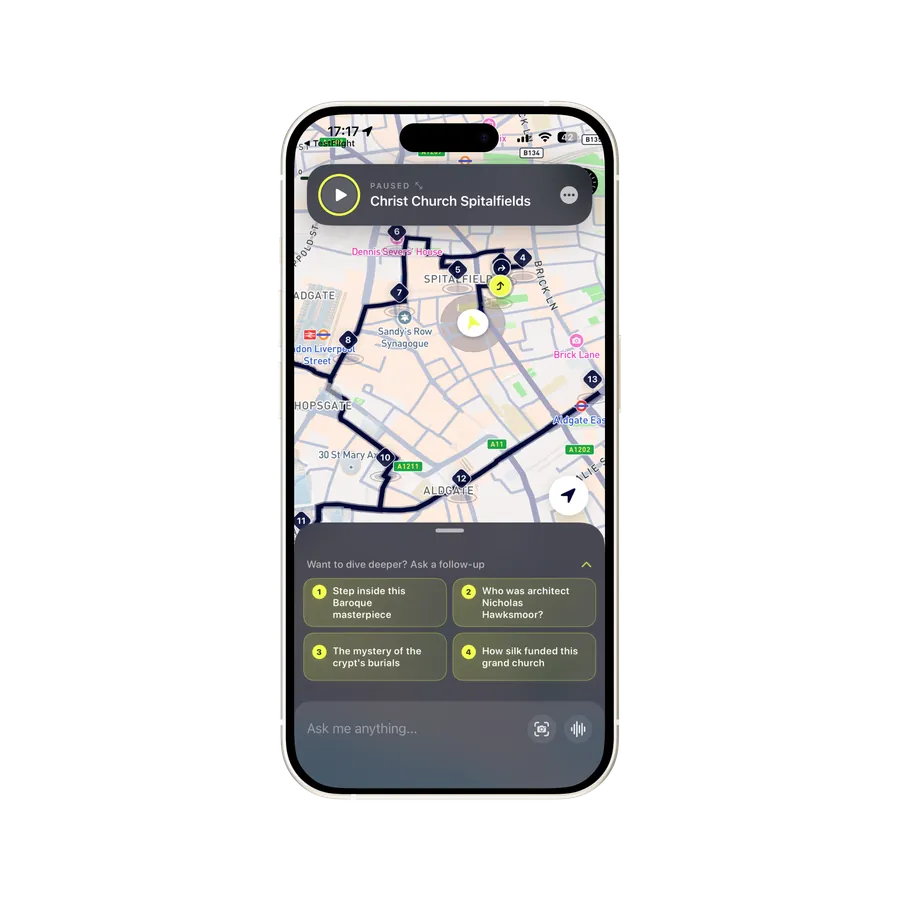
Hear the story as you walk.

Napoleon's 1802 commission, the cholera epidemic the canal was built to fight, the working-class neighbourhoods that grew around it, the 1860 Haussmann vault, Carné's 1938 Hôtel du Nord, the 2001 Amélie shoot, today's bobo crowd.

iWander on-demand AI guide

03

Ask anything along the way.

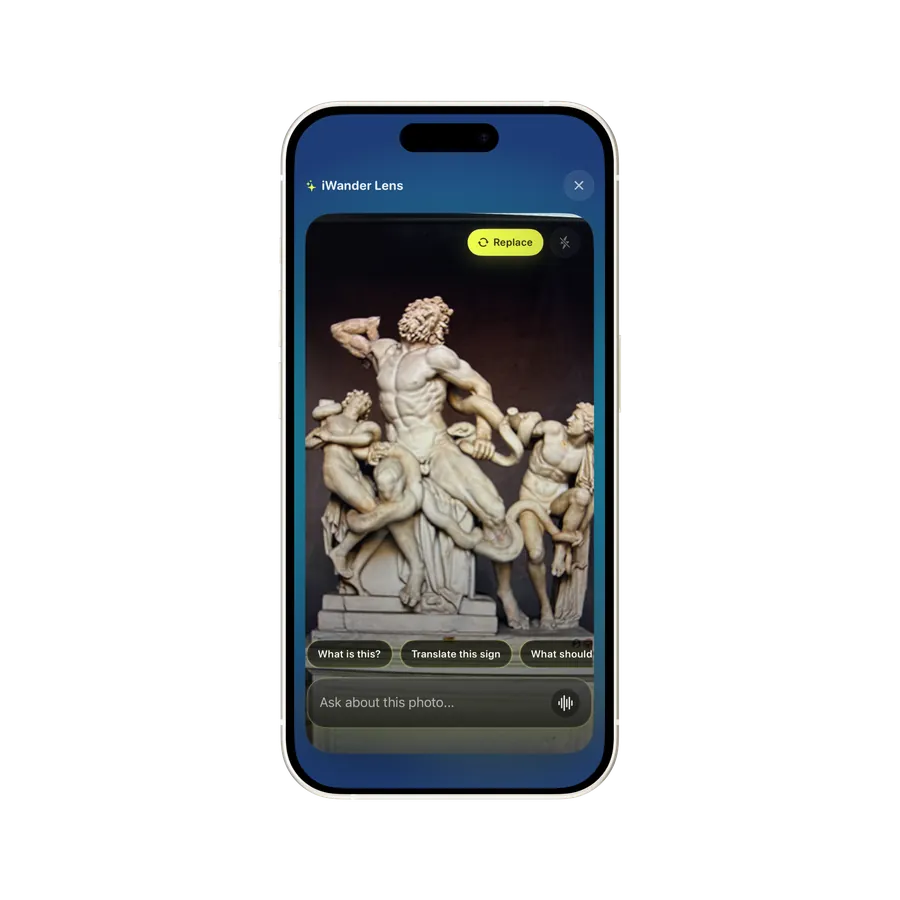
What's that lock? Which film? When was that bakery? Point your camera, ask out loud, or type. Your guide answers in seconds.

Works offline · 9 voiced languages · 30 free minutes on signup

What makes it worth walking

Napoleon's water-supply scheme that became Paris's favourite afternoon

The Canal Saint-Martin was built to solve a public health crisis. In 1802 Paris had no piped water - households drew from the Seine (then a working sewer), shallow wells (contaminated), or paid water-carriers who came up the hill from the river. A cholera outbreak that year killed thousands. Napoleon - then First Consul, not yet Emperor - issued a decree on 29 Floréal Year X (19 May 1802) ordering the construction of a fresh-water canal from the Ourcq river 100 km east, into Paris, via three downhill canals: the Canal de l'Ourcq, the Canal Saint-Denis and the Canal Saint-Martin. The water would be drinkable; the canals would also carry coal, stone and grain barges directly into the city. The plan was financed by a wine tax. Construction took 23 years; the canal opened in 1825.

A working canal until the 1960s

For 140 years the Canal Saint-Martin was working infrastructure. Barges moved grain from the Brie, stone from Beauvais, coal from the north and Picardie. The basins at La Villette were Paris's main wholesale produce yards (the Marché aux Bestiaux - cattle market - was there till 1974). The 10th arrondissement, which grew up around the canal, was a working-class neighbourhood of railway workers (Gare de l'Est and Gare du Nord are both a 10-minute walk), barge-handlers, tannery workers, and the staff of the great Hôpital Saint-Louis (the 1607 plague hospital, still operating). The canal froze in winter; children skated on it. Boris Vian wrote a song about it (Le Déserteur, 1954). Marcel Carné set Hôtel du Nord here in 1938 and made it shorthand for the Paris of working people.

By the 1960s the canal had been overtaken by trucks and trains. There was a serious proposal in 1971 to cover the entire 4.6 km with a motorway - an idea so close to being executed that demolition plans were drawn up. A grassroots resistance campaign, supported by Carné's film and a public petition, killed the project in 1974. The canal was instead listed as a historic monument in 1993 and the locks and bridges have been progressively restored.

Amélie and the second life

Jean-Pierre Jeunet's 2001 film Amélie - filmed in part on the Quai de Valmy - introduced the canal to international audiences. The skipping-stones scene was filmed on the Quai de Valmy by the Pont Tournant de la Rue Dieu (the swing-bridge); Audrey Tautou stands on the lower quai and skips the stones across the water. The Hôtel du Nord scene was filmed on the bank. Other scenes used the Café des Deux Moulins in Pigalle (not the canal, despite some confusion).

Through the 2010s the canal became one of the symbols of "bobo Paris" - the bourgeois-bohémien (bobo) caricature of young professionals with kids who'd rather live in the 10th than the 16th. Quai de Valmy filled up with vintage shops, Le Comptoir Général (a curiosity-shop bar in a former tropical-fish dealer's), Holybelly for brunch, Du Pain et des Idées for bread, Liberté for pastry. The Sunday car-free quais became a city-wide rendez-vous. The Hôtel du Nord building, saved from demolition in 1989, reopened as a brasserie in 2005 and now hosts a permanent Carné-Arletty exhibition in a back room.

What's actually here

The canal walk has nine working locks (Écluses du Temple, Bonne Nouvelle, Récollets x2, Bichat, Restigouche, La Villette - the names matter to barge crews more than to walkers), eight iron pedestrian footbridges, two swing-bridges (the Pont Tournant de Rue Dieu and the Pont Tournant des Récollets), and seven arched stone road-bridges. The water is 25 metres higher at the north end than the south end - hence the lock chain. The 2 km from République to Bastille runs underground under Boulevard Richard-Lenoir, vaulted by Baron Haussmann in 1860 to accommodate the new boulevard above.

The neighbourhood is still working-class enough to feel lived-in, but the gentrification is real - hotel rates have doubled since 2015, the small businesses around Rue de Lancry have turned over. The Hôpital Saint-Louis (a 1607 plague hospital that became a teaching hospital, still operating) has free courtyard gardens open to the public most days; they are some of the quietest spaces near the canal. Place Sainte-Marthe, two blocks east of the canal, is the village-within-the-neighbourhood: a tiny cobbled square with painted houses and three of the city's best cheap restaurants (Chez Marie-Louise, Brasserie La Marine). The Atelier des Lumières (digital art, 38 Rue Saint-Maur) is a 15-minute walk south-east. The Northern Marais is a 15-minute walk south. The canal is the city's connecting tissue here.

Questions

Frequently asked

The 4.6-km canal in the 10th arrondissement of Paris, commissioned by Napoleon in 1802 to bring fresh water and goods barges into the city. It runs from the Bassin de la Villette (where it meets the Canal de l'Ourcq) southward to Place de la Bastille, where it joins the Seine via the Port de l'Arsenal. Four kilometres are open-air, with nine locks (écluses) lifting boats over a 25-metre vertical, eight iron pedestrian footbridges, two swing-bridges, and seven arched stone road-bridges. The southern 2-km stretch from République to Bastille runs underground, vaulted by Baron Haussmann in 1860.
A full canal walk - from the Bassin de la Villette at the north end to where the canal disappears underground at République - is 2 to 2.5 hours at a relaxed pace, including stops at the locks and one or two pastry shops. Just the photogenic central stretch (Rue de Bichat to the Hôtel du Nord, 1.5 km) is 30-40 minutes. The whole canal is car-free on Sundays and public holidays.
Yes - the skipping-stones scene that became one of the film's most-recognised moments was filmed on the Quai de Valmy by the Pont Tournant de la Rue Dieu (the swing-bridge). The Hôtel du Nord at 102 Quai de Jemmapes - which gave its name to the 1938 Marcel Carné film with Arletty - is on the other bank. The actual Hôtel du Nord building survived, was nearly demolished in 1989, was saved by a public campaign, and is now a brasserie and bar.
The east bank (Quai de Valmy) between Rue Marseille and Rue Bichat - especially the wide quai stretch around the Pont Tournant. Bring wine, glasses, a baguette, cheese from Aux Comptoir des Producteurs (47 Rue Yves Toudic), pastry from Du Pain et des Idées (34 Rue Yves Toudic). Sundays the canal is car-free and the quais fill from 14:00 onwards. Glass is technically not allowed; plastic is.
Just south of Place de la République, at the entrance to Boulevard Richard-Lenoir, the canal disappears under a stone vault built by Baron Haussmann in 1860. It runs underground for 2 km beneath the boulevard until it re-emerges at the Port de l'Arsenal beside the Place de la Bastille. The vault is still in use - barges go through it - and you can see them entering and leaving at either end. Boat-tours from the Bassin de la Villette to the Arsenal include a slow underground passage.
34 Rue Yves Toudic, one block west of the canal. Christophe Vasseur's bakery, opened 2002 in a preserved 1875 interior - and probably the most-talked-about boulangerie in modern Paris. Famous for the pain des amis (a wild-yeast country loaf the size of a wheel), escargot rolls (pistachio-chocolate, raisin-orange, praliné), and the chausson aux pommes. Closed Sat-Sun. Queue 15-30 minutes at peak.
Métro: République (lines 3, 5, 8, 9, 11) is the southern entry; Jacques Bonsergent (5) and Goncourt (11) are at the canal's central photogenic stretch; Jaurès (2, 5, 7bis) is at the Bassin de la Villette at the north end. Walk north-to-south or south-to-north - the canal is 4.6 km, flat. From CDG, RER B to Gare du Nord then 10-min walk east; from Orly, RER B to Châtelet then métro 5 north.
Yes. Download a walk over Wi-Fi at your hotel before you head out. French SIMs (Orange, Free Mobile) are cheap and 4G coverage is excellent across central Paris. iWander runs entirely on-device once downloaded.

How to find it

Getting to the Canal

Arrondissement
10th (canal proper); touches 11th, 19th
Nearest métro
Jaurès (2, 5, 7bis) north end; Jacques Bonsergent (5) and Goncourt (11) central; République (3, 5, 8, 9, 11) south
From CDG airport
RER B to Gare du Nord (30 min) · 10-min walk east · about €12
From Orly
Orlybus + RER B to Châtelet then métro 5 north (50 min) · about €15
Best season
April-October. The canal is a Sunday afternoon. Avoid January-February (cold, often grey)
When to walk
Sunday afternoon (car-free). Late Friday at sunset (golden light on the locks). Weekday lunch for the bakeries

The headline sights

Three landmarks to anchor your walk

Pull the audio walk around any of these and the rest of the canal falls into place.

Écluse des Récollets

The double-lock pair on the central stretch - the most photographed lock on the canal, framed by two iron footbridges. Barges pass through 1-3 times a day; check the EnvVN barge timetable or just wait. The 7-minute rise of a 38-tonne barge is a Paris experience.

Walk the locks

Hôtel du Nord

102 Quai de Jemmapes. The 1885 building that gave Carné's 1938 film its name and Arletty her most quoted line. Saved from demolition in 1989; now a brasserie and bar open daily 09:00-02:00. The 1930s wood-panelled interior + permanent Carné exhibition inside.

Walk the cinema spots

The underground vault

The Haussmann-era vault from République to Bastille - 2 km of stone-vaulted canal beneath Boulevard Richard-Lenoir, in continuous use since 1860. Visible only on the Canauxrama or Paris Canal boat-tours (€22-26, 2.5 hours, departures from Bassin de la Villette). A genuinely strange Paris experience.

Walk above the vault

Other Paris neighbourhoods to wander

Walk somewhere else in Paris

Build any Canal walk you want.

Tell us a theme, a question, a vibe - Amélie, the locks, a Sunday picnic, Du Pain et des Idées morning, an Hôtel du Nord evening - and your walk is ready in 30 seconds.

Get the iWander app

30 free minutes on signup · Subscriptions from $10/mo · Cancel anytime

Updated 19 May 2026 by the iWander local team · Curated for accuracy