AboutEnterprise solutionsGet the app
Free walking tour · Pigalle · Paris

Walk Pigalle,
your way.

Free Pigalle and SoPi walking tour - Moulin Rouge, cocktails, Martyrs, in 30 seconds

Your free walking tour of Paris's old red-light district reborn as the best cocktail-bar quarter in town. The Moulin Rouge, SoPi by night, Rue des Martyrs by day, the Romantic-era museums. Pick a walk below or tell us a theme. Works offline, 9 voiced languages, 30 free minutes on signup.

Or pick your walk

Local knowledge

What we'd tell you on day one

Six things that change how you walk Pigalle.

01

SoPi by night, Rue des Martyrs by day.

The neighbourhood has two very different rhythms. South Pigalle's cocktail bars (Glass, Dirty Dick, Lulu White) don't really start before 19:00 and stay alive till 02:00 - that's the evening Pigalle. Rue des Martyrs (the food street) lives between 09:00 and 14:00 for the bakeries and the market, plus a second flurry 17:00-19:30 for the after-work shopping - that's the daytime Pigalle. Plan your hours accordingly.

02

Avoid the bar touts on Boulevard de Clichy.

The strip from Place Pigalle to Place Blanche - past the Moulin Rouge - still has touts in front of a few clip-joint bars promising shows and ending in €600 bills for warm beer. Walk past quickly, ignore the "monsieur, juste un verre" lines, and step into the side streets (Rue Frochot, Rue Notre-Dame-de-Lorette) where real Paris lives. The Moulin Rouge itself is fine - it's a working family-friendly cabaret with a ticket office.

03

The Musée de la Vie Romantique is free.

16 Rue Chaptal, hidden behind a green wooden door and a cobbled drive. Two-storey 1830s hôtel particulier with George Sand mementoes (her writing desk, jewellery, the lock of Chopin's hair she kept), Ary Scheffer's paintings, and a beautiful walled garden with a café open March to October. Permanent collection free; temporary shows €9. Open Tue-Sun 10:00-18:00. One of the city's most-loved hidden museums.

04

Avenue Frochot is gated - peer through.

Just off Place Pigalle (entrance on Rue Victor-Massé), Avenue Frochot is a private gated villa-street built 1830, lined with romantic-era houses. You can't normally enter - the gate is closed - but the view through it down the cobbled drive is a piece of secret Paris. Toulouse-Lautrec lived at #15 in the 1890s. The gate is open occasionally during European Heritage Days (third weekend of September) - one of the best free Paris-tour days of the year.

05

Rue des Martyrs is closed Mondays.

Most of the food shops on Rue des Martyrs - Sébastien Gaudard, La Chambre aux Confitures, Aux Merveilleux de Fred (the meringue place), the cheese shops - close Mondays. Tuesday-Saturday they're all open. Sundays the bakeries and market stalls work mornings only. Plan a Tue/Wed/Thu lunch or Sun brunch and you'll have everything open at once.

06

This is the best Sacré-Coeur approach.

Most tourists arrive at Sacré-Coeur from Anvers métro and trudge up the Rue de Steinkerque souvenir-shop slog. Don't. Instead, take métro 2 to Blanche, walk past the Moulin Rouge, then climb Rue Lepic - the curving cobbled village street that Amélie walks in the film. You'll pass the Moulin de la Galette (Renoir's bal), Café des Deux Moulins, then Place du Tertre and up to the basilica. Same destination, 80 percent less touristy walk.

How it works

How iWander walks Pigalle with you.

Three things, in 30 seconds.

iWander home screen

01

Type your walk.

Any street, theme or vibe. "Moulin Rouge 1889", "SoPi cocktails", "Rue des Martyrs lunch", "Toulouse-Lautrec", "Sacré-Coeur from below". iWander writes you the walk in 30 seconds.

iWander audio walk in progress

02

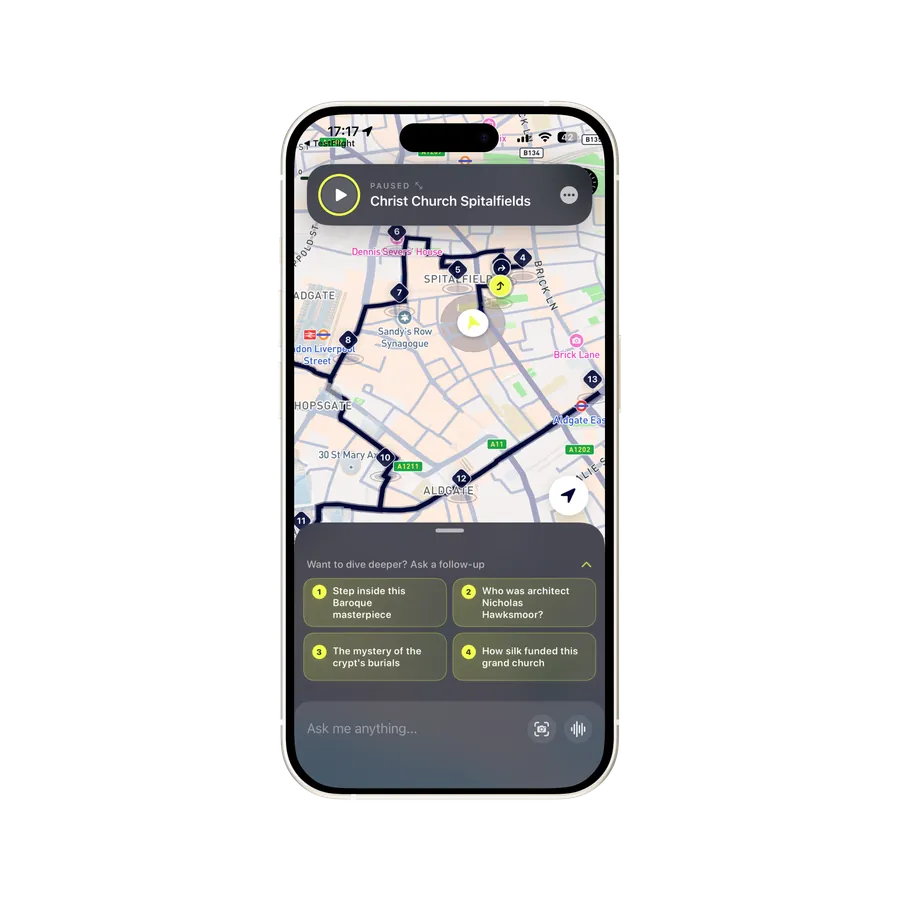
Hear the story as you walk.

The Romantic-era painters (Géricault, Delacroix) studios in the 1830s, George Sand and Chopin at Rue Chaptal, the 1889 cabaret boom, the Moulin Rouge's opening night, Toulouse-Lautrec drawing the dancers, the post-war jazz cellars, the 1970s sex industry, the 2010s cocktail revival.

iWander on-demand AI guide

03

Ask anything along the way.

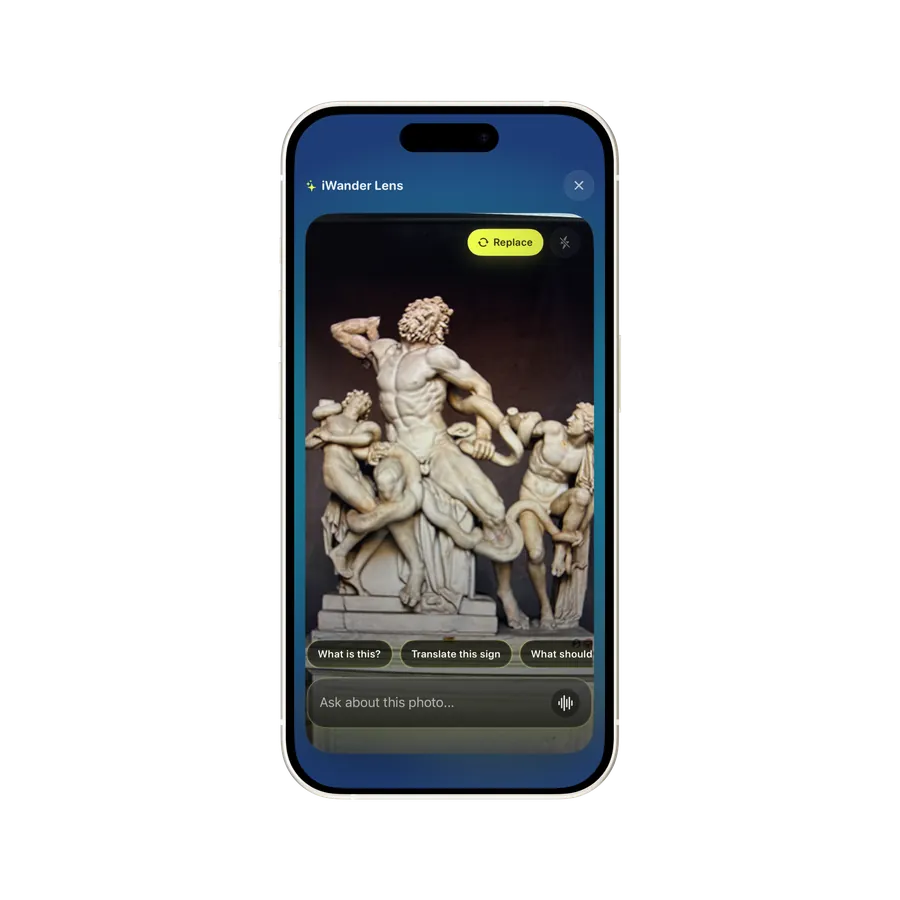
Whose statue? Which bar? When did that close? Point your camera, ask out loud, or type. Your guide answers in seconds.

Works offline · 9 voiced languages · 30 free minutes on signup

What makes it worth walking

A neighbourhood that has been everything Paris is embarrassed about, twice

Pigalle has a longer reputation problem than any other Paris neighbourhood. For 150 years it was the city's red-light district - the address you'd visit but not admit to. Today its southern half is one of the most expensive cocktail-bar zones in central Paris, but the reputation lags reality by about a decade. The truth is that Pigalle has reinvented itself at least four times: Romantic artists' studios in the 1830s, cabaret and brothel district from the 1880s, jazz cellar and music-shop strip from the 1950s, cocktail-bar SoPi from the 2010s. Each layer is still half-visible if you walk the right streets.

The Romantic era: George Sand, Chopin, Delacroix

In the 1830s the area between the Trinité church and the foot of Montmartre was new development - the city was expanding north, the slope was less crowded than central Paris, and the rents were lower. The Romantic painters and writers found it. Théodore Géricault had his studio here. Eugène Delacroix lived at 58 Rue Notre-Dame-de-Lorette. The pianist Frédéric Chopin and the novelist George Sand had a long, public affair through the late 1830s and 1840s; Chopin lived at 80 Rue Taitbout, Sand at 16 Rue Chaptal (now the Musée de la Vie Romantique). Ary Scheffer, the Dutch-French Romantic painter, had a townhouse and studio at 16 Rue Chaptal - the building that's now the museum. The Romantic-era "Nouvelle Athènes" (New Athens) - so called for the neoclassical residential streets the developer Jacob Boyer built here in the 1820s - is still standing: Rue Chaptal, Rue La Bruyère, Place Saint-Georges, the Avenue Frochot gated villa.

The cabaret boom

From the 1870s Pigalle was reborn as Paris's entertainment district. Le Chat Noir cabaret opened in 1881 (gone, on Boulevard de Rochechouart, marked with a plaque). The Moulin Rouge opened in 1889 - on the corner of Place Blanche and Boulevard de Clichy, in a deliberately provocative building with a red windmill on the roof. Its first programme included the can-can - already 50 years old as a dance, but performed at the Moulin Rouge in the high-energy, high-kicking style that defined the international image of Paris. Toulouse-Lautrec started drawing the dancers (La Goulue, Jane Avril, Chocolat) in 1889 and never stopped; his posters are arguably the founding documents of modern advertising. The cabaret survived a 1915 fire, a 1933 stage collapse, the German Occupation (the dancers performed for Wehrmacht audiences), the 1960s and 70s decline, and is still running two shows nightly.

The cabaret economy brought everything else. By 1900 Place Pigalle had three theatres, six cabarets, dozens of cafés, brothels with municipal numbers (the "maisons closes" were legal until 1946), and the densest concentration of working artists in Paris. Picasso, Modigliani, Renoir, van Gogh, Lautrec - they all lived or worked here between 1880 and 1920. Picasso's first Paris studio was at 49 Rue Gabrielle in 1900, just up the hill. The bistros that fed them - the Café de Flore opened in 1887, the Brasserie Lipp in 1880 - are still there.

Decline and the music shops

The maisons closes were closed by national law in 1946. Through the 1950s and 1960s Pigalle's reputation calcified into something tackier: peep shows, sex shops, hostess bars, and the bachelor-party tourism that came with them. The cabaret revues - Moulin Rouge, Folies-Bergère, Crazy Horse - kept going as one tier of entertainment, but the surrounding neighbourhood was visibly seedy. One curious survival was the music-instrument shops. The 1960s and 70s saw guitars become cheap enough for a working musician to own one, and a strip of shops grew along Rue Jean-Baptiste Pigalle and Rue de Douai selling guitars, basses, drum kits, vintage gear, sheet music. They are still there - Star's Music, La Boîte à Cuivres, Paul Beuscher - and they are the city's musicians' shopping district. If your taxi driver is humming an Édith Piaf song, this is probably where he bought his accordion.

SoPi and the cocktail bars

From about 2010, a wave of young bar owners began moving into the 9th-arrondissement side of Pigalle - the side south of Boulevard de Clichy. The trigger was probably Dirty Dick, a tiki cocktail bar that opened in 2013 in a former sex-shop on Rue Frochot, kept the original neon sign, and ironised the whole genre. Within five years the area south of Clichy had a dozen serious cocktail bars - Glass at 7 Rue Frochot (cult speakeasy), Le Coq (cocktail-and-bistro hybrid), Lulu White (absinthe and jazz), Bonhomie, Hôtel Particulier Montmartre (a hidden rooftop bar that takes 24-hour reservation calls). Hotels (Pigalle Hotel, Le Pigalle) opened to feed the bars. The new name "SoPi" - obviously meant to echo SoHo - stuck. The Tati discount store on Rue des Martyrs closed in 2023, marking the official end of the gritty Pigalle.

The northern half - North Pigalle, the slope going up to Montmartre - is a different beast. Quieter, more residential, more old-Paris. The Moulin de la Galette (Renoir's bal, on Rue Lepic) still stands; the Café des Deux Moulins from Amélie is on Rue Lepic too. The walk up Rue Lepic from Place Blanche to Place du Tertre is, in the opinion of most locals, the only acceptable Sacré-Coeur approach for someone who is not a first-time tourist.

Questions

Frequently asked

Pigalle is a neighbourhood straddling the 9th and 18th arrondissements at the base of the Montmartre hill. Historically it was Paris's red-light district - the Moulin Rouge opened here in 1889, the music halls and cabarets followed, and through most of the 20th century the area was famous for sex shops, peep shows and cabaret revues. The southern half (the 9th-arr side) has rebranded as South Pigalle - 'SoPi' - one of the city's best cocktail-bar districts.
A full Pigalle/SoPi walk - Place Pigalle, Moulin Rouge, Avenue Frochot, the music-shop strip on Rue Jean-Baptiste Pigalle, Rue des Martyrs food street, the Musée de la Vie Romantique, and ending at Trinité or up the Montmartre hill - is 2.5 hours at a relaxed pace. A focused walk (just SoPi cocktails, or just Rue des Martyrs, or just the Romantic-era museums) is 60-90 minutes.
Yes, by Paris standards. The neighbourhood has cleaned up dramatically since 2010. The Boulevard de Clichy strip near the Moulin Rouge still has a few adult-shop fronts and bachelor-party traffic, but real crime is rare. South Pigalle (south of Boulevard de Clichy) is now bourgeois cocktail-bar territory. North Pigalle (up the hill) is residential and quiet. Standard precautions: don't accept drinks from strangers on Boulevard de Clichy, ignore the bar touts, take Uber back if you're alone after 02:00.
The Moulin Rouge runs two shows nightly (typically 21:00 and 23:00) of its long-running 'Féerie' cabaret revue - 60 dancers, the famous cancan, full set design, champagne or dinner included. It is a working tourist attraction (about 600,000 visitors a year) and the production values are genuinely high; the food has improved since the 2020 renovation. €115-220 depending on package. Book ahead.
The marketing name for the 9th-arrondissement triangle south of Boulevard de Clichy - bordered by Rue Saint-Lazare, Rue des Martyrs and Rue Pigalle. From around 2010 the area transformed from a sex-industry tail end into one of Paris's best cocktail-bar districts. Anchors: Glass, Dirty Dick (a tiki bar in a former sex shop with the original neon kept), Le Coq, Lulu White, Hôtel Particulier Montmartre.
A 600-metre village high street climbing from Notre-Dame-de-Lorette church up to the foot of Montmartre - one of the best food streets in Paris. Rose Bakery (English-French brunch institution), Sébastien Gaudard (the city's most-praised cake shop), Maison Aleph (Lebanese pastry), small charcuteries, boulangeries, fromageries, the Marché Saint-Quentin nearby. Elaine Sciolino wrote a whole book about it ('The Only Street in Paris', 2015). Open mornings + late afternoons; closed Mondays.
Métro: Pigalle (lines 2, 12) is the centre of the neighbourhood; Blanche (line 2) is right by the Moulin Rouge; Saint-Georges (line 12) is in the heart of SoPi; Notre-Dame-de-Lorette (line 12) is at the foot of Rue des Martyrs; Anvers (line 2) is the eastern edge towards Sacré-Coeur. From CDG, RER B to Châtelet then métro 4 + 12 north.
Yes. Download a walk over Wi-Fi at your hotel before you head out. French SIMs (Orange, Free Mobile) are cheap and 4G coverage is excellent across central Paris. iWander runs entirely on-device once downloaded.

How to find it

Getting to Pigalle

Arrondissement
9th (SoPi side); 18th (Moulin Rouge + slope up to Montmartre)
Nearest métro
Pigalle (2, 12), Blanche (2), Saint-Georges (12), Notre-Dame-de-Lorette (12), Anvers (2)
From CDG airport
RER B to Châtelet, then métro 4 + 12 (45 min) · about €12
From Orly
Orlybus + métro (55 min) · about €15
Best season
Year-round. May-October most pleasant. Pigalle nightlife works in any weather
When to walk
Rue des Martyrs Tue-Sat morning. SoPi bars 19:00 onwards. Moulin Rouge show 21:00 or 23:00. European Heritage Days Sep for Avenue Frochot

The headline sights

Three landmarks to anchor your walk

Pull the audio walk around any of these and the rest of the neighbourhood falls into place.

The Moulin Rouge

82 Bd de Clichy. Opened 1889. The red windmill still turns. Two nightly cabaret shows (21:00 + 23:00) of the "Féerie" revue with 60 dancers, the cancan, champagne or dinner. €115-220. The 2020 renovation rebuilt the interior. Book ahead.

Walk the Moulin

Rue des Martyrs

The 600-metre village high street running from Notre-Dame-de-Lorette church up to Montmartre. Sébastien Gaudard's cake shop, Rose Bakery for brunch, Aux Merveilleux de Fred (meringues), La Chambre aux Confitures, and a real working market on the bottom block. Most shops closed Mondays.

Walk Rue des Martyrs

SoPi cocktail strip

The triangle south of Boulevard de Clichy - Rue Frochot, Rue Notre-Dame-de-Lorette, Rue Pigalle. Glass (#7 Rue Frochot, speakeasy, knock to enter), Dirty Dick (a tiki bar in a former sex shop, original neon kept), Lulu White (absinthe + jazz), Le Coq (cocktail bistro). All open from 19:00 till 02:00.

Walk SoPi

Other Paris neighbourhoods to wander

Walk somewhere else in Paris

Build any Pigalle walk you want.

Tell us a theme, a question, a vibe - Moulin Rouge, SoPi cocktails, Rue des Martyrs at 10am, Toulouse-Lautrec, a Sacré-Coeur ascent - and your walk is ready in 30 seconds.

Get the iWander app

30 free minutes on signup · Subscriptions from $10/mo · Cancel anytime

Updated 19 May 2026 by the iWander local team · Curated for accuracy