AboutEnterprise solutionsGet the app
Free walking tour · Bastille · Paris

Walk Bastille,
your way.

Free Bastille walking tour - July Column, Opéra, Promenade Plantée, in 30 seconds

Your free walking tour of the square where the Revolution started, the world's first elevated park, the Opéra Bastille, the canal-marina, the Faubourg Saint-Antoine furniture quarter. Pick a walk below or tell us a theme. Works offline, 9 voiced languages, 30 free minutes on signup.

Or pick your walk

Local knowledge

What we'd tell you on day one

Six things that change how you walk Bastille.

01

Walk the Promenade Plantée from the Bastille end.

The Promenade Plantée starts at the back of the Opéra Bastille - the entrance is on Avenue Daumesnil at the corner of Rue de Lyon, just behind the opera, marked with a small staircase climbing up. Walk east. The first 1.4 km runs on top of the Viaduc des Arts at rooftop height - the most photogenic stretch. Carry on as long as you have time; you can drop off at any of the staircases. Full length to the Bois de Vincennes is 4.7 km, about 70 minutes one-way.

02

The High Line copied this.

Locals are quietly amused that the New York High Line gets all the international attention while Paris's Promenade Plantée - which opened 16 years earlier and pioneered the format - is barely mentioned. The Plantée is the original elevated rail-trail park. Same idea: take a disused 19th-century rail viaduct, plant it, open it to the public. The Plantée is longer (4.7 km vs the High Line's 2.3 km), free, and never crowded. Walk it on a sunny Saturday morning and tell your New York friends.

03

The fortress outline is in the pavement.

The medieval Bastille fortress was torn down in 1789-90 and the stones reused (some made it into the Pont de la Concorde across the Seine). The outline of the eight towers is now traced in the pavement of Place de la Bastille and Rue Saint-Antoine - thin lines of darker stone in the cobbles. The clearest section is at the south-west corner of the Place, just outside the Bastille métro entrance. Crouch down for thirty seconds and trace it.

04

Combine Bastille with Marché d'Aligre.

The Marché d'Aligre - the open-air food market - is technically in the 12th arrondissement (one block from the Bastille border) but is the natural extension of any Bastille walk. Place d'Aligre is a 10-minute walk east-southeast from the Bastille métro along Rue de la Roquette and then south on Rue d'Aligre. Open Tuesday-Sunday mornings 07:30-13:30. Combine: 09:00 at the market for breakfast, 10:30 at the Bastille square, 11:00 onto the Promenade Plantée for a long walk to Vincennes.

05

Avoid Rue de Lappe Friday-Saturday late.

The 200-metre nightlife strip has 30+ bars and a Friday/Saturday-night density problem. From 23:00 to 03:00 it's wall-to-wall, mostly stag parties and youth crowds, loud sound systems competing on the pavement. Locals have campaigned against the noise for years. Thursday evening (19:00-22:00) is the moment - same atmosphere, half the volume, and you can hear yourself. Or skip Rue de Lappe entirely for the parallel Rue de la Roquette, which has better bistros (Le Servan, Le Petit Marché) and quieter cafés.

06

The Faubourg passages are mostly free.

The Faubourg Saint-Antoine - the medieval furniture quarter east of the Place de la Bastille - is a maze of cobbled cours (courtyards) running off the main street. Push the doors. Cour du Bel Air (56 Rue du Faubourg-Saint-Antoine), Cour Damoye (12 Rue Daval), Cour des Trois Frères (51 Rue de Charonne), Passage du Cheval Blanc (2 Rue de la Roquette) - all are publicly walkable during working hours. The Cour Damoye is the most photogenic; the Passage du Cheval Blanc is the longest. Stand at the entrance, push, and walk in.

How it works

How iWander walks Bastille with you.

Three things, in 30 seconds.

iWander home screen

01

Type your walk.

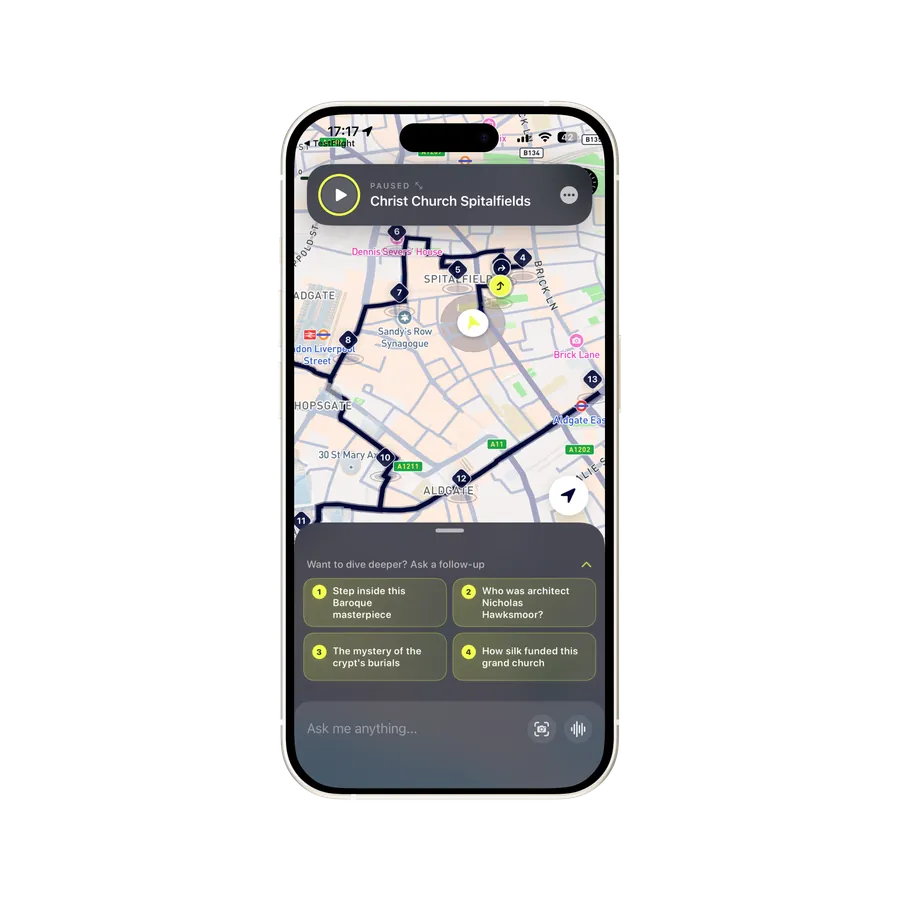
Any street, theme or vibe. "14 July 1789", "Promenade Plantée to Vincennes", "Opéra Bastille", "Rue de Lappe Balajo", "Faubourg furniture". iWander writes you the walk in 30 seconds.

iWander audio walk in progress

02

Hear the story as you walk.

Charles V building the fortress in 1370, the prisoners of the Sun King, the morning of 14 July 1789, the demolition by the citizens, the 1830 Trois Glorieuses, the construction of the column, the 1989 Opéra Bastille, the 1993 Promenade Plantée, today's roundabout-reclaiming pedestrian plaza.

iWander on-demand AI guide

03

Ask anything along the way.

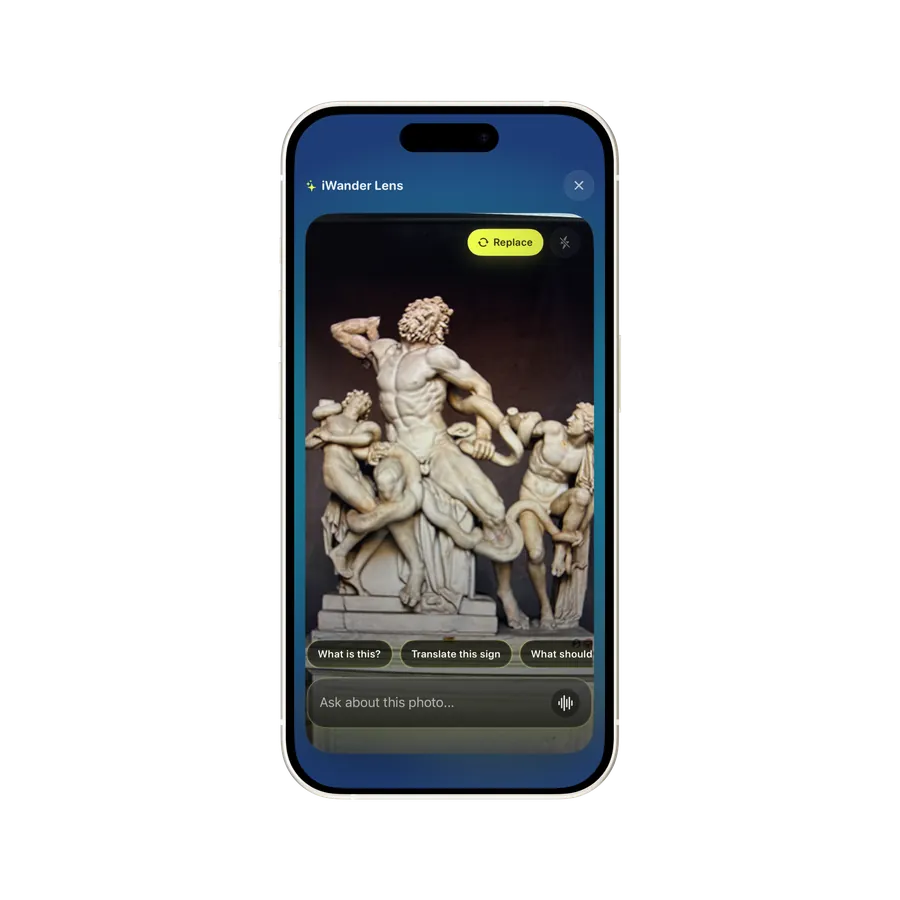
What's that monument? Which workshop? Where did the fortress wall stand? Point your camera, ask out loud, or type. Your guide answers in seconds.

Works offline · 9 voiced languages · 30 free minutes on signup

What makes it worth walking

The square that started a revolution and the park that started a global trend

Bastille has two layers that contradict each other. The first is the political symbol: this is the spot where the French Revolution began, where the Bastille fortress was stormed on 14 July 1789, where the Trois Glorieuses revolution of 1830 brought down another king, where the workers' uprisings of 1848 and 1871 fought their barricades, where every modern French left march still ends. The second layer is the practical neighbourhood: a thriving 21st-century junction of the 4th, 11th and 12th arrondissements, with an opera house, a marina, the world's first elevated park, an enormous food market and a working artisan quarter. The first layer is what you read about; the second is what you walk through.

The fortress, the prisoners, the storming

The Bastille was a medieval fortress built between 1370 and 1383 by Charles V to defend the eastern wall of Paris from English attack during the Hundred Years War. Eight round towers, 25-metre walls, two enclosing moats. By the 17th century it was being used less for defence and more as a prison, primarily for political prisoners held without trial by lettre de cachet - the arbitrary royal arrest warrant that became hated as a symbol of absolute power. Voltaire was imprisoned here twice (in 1717 and 1726, for satirising the regent). The Marquis de Sade was held here from 1784 till just before the storming. The "Man in the Iron Mask" - the mysterious anonymous prisoner of Louis XIV - was held here from 1698 till his death in 1703.

On the morning of Tuesday 14 July 1789, after weeks of political crisis and one day after the king dismissed his reformist finance minister Necker, Parisians attacked the Hôtel des Invalides for gunpowder. They needed bullets. The Bastille held the city's main gunpowder magazine. About 600 attackers marched east; they were joined by Royal-Cravate cavalry deserters; they besieged the fortress for four hours. About 100 attackers were killed by the small garrison (some 80 invalided veterans plus 30 Swiss mercenaries); one defender was killed. The governor, Bernard-René Jordan de Launay, surrendered in mid-afternoon on a promise of safe conduct; the crowd ignored the promise and beheaded him in the streets on the way to the Hôtel de Ville. Seven prisoners were freed (four forgers, two mentally ill men, one nobleman). The fortress was empty.

What followed was a slow, communal demolition. The stones were sold for souvenirs (one made it to George Washington as a gift). The site was levelled by 1791. The footprint of the eight towers was traced in the pavement when the square was redesigned, and you can still trace it today. The "key to the Bastille" - the actual iron key of the main gate - was sent by Lafayette to Washington in 1790 and still hangs at Mount Vernon.

The column, the operas, the Promenade

The 52-metre Colonne de Juillet in the centre of the square was built 1835-1840 to commemorate not the 1789 storming but the 1830 "Trois Glorieuses" revolution that overthrew Charles X. The names of the 615 Parisians who died in that revolt (and in the 1848 follow-up) are gilded into the column. At the top stands the Génie de la Liberté - a winged bronze figure by Auguste Dumont - holding a broken chain in one hand and a torch in the other. The column was renovated 2021-2024 and the gilding restored.

The Opéra Bastille on the south-east corner of the square was built for the bicentenary of the Revolution. Mitterrand wanted a "popular opera house" - 2,700 seats versus the Palais Garnier's 1,900 - and held a competition won by a young Canadian-Uruguayan architect, Carlos Ott. The building opened on 13 July 1989, the eve of the bicentenary, with a gala concert; the first full opera (Berlioz's Les Troyens) followed in March 1990. The exterior - grey granite, flat glass, no ornament - is one of the most divisive pieces of architecture in Paris. The interior, by contrast, is universally praised for its acoustic clarity. The Opéra National de Paris now stages most major operas here; Garnier hosts ballet and chamber operas.

The Promenade Plantée opened in 1993 on the 4.7-km disused railway viaduct that used to bring trains from the Gare de la Bastille (closed 1969) out to the Bois de Vincennes. The architects (Patrick Berger and Philippe Mathieux) planted it with lime trees, lavender, cherry trees, climbing roses and wisteria; the path runs at rooftop height for the first 1.4 km on top of the Viaduc des Arts (the brick viaduct itself converted into artisan workshops in its 71 arched undercrofts), then drops to street level through the 12th arrondissement, then climbs again into Vincennes. It was the world's first elevated rail-trail park. New York's High Line - which now gets all the press - opened 16 years later, in 2009, copying the format directly. The Plantée is still free, still mostly empty, and still better.

What the neighbourhood actually does

Today the Bastille area is one of the city's most-used everyday neighbourhoods. The square itself was pedestrianised (mostly) in a 2018-2021 renovation that closed the central traffic-island and made the central plaza walkable - locals have reclaimed it for skateboarding, demonstrations, picnics. The Port de l'Arsenal marina just south of the square - where the Canal Saint-Martin meets the Seine - holds 220 boats and has a quiet free garden. The Rue de la Roquette and Rue du Faubourg-Saint-Antoine running east are still working streets with small bistros and the Marché d'Aligre at the far end. The 11ème's Charonne bistronomy strip is a five-minute walk north. The Marais is a five-minute walk west. Bastille is the hinge of the eastern half of central Paris - the spot every Parisian crosses several times a week.

The square is also still the city's preferred demonstration end-point. Every major French left march ends here. Bastille Day (14 July) starts with the morning military parade up the Champs-Élysées and ends with a free open-air ball in the firefighters' caserne near the Place; it's been a free public party since 1937 and is one of the most loved Paris nights of the year.

Questions

Frequently asked

The 1.8-hectare circular square at the meeting of the 4th, 11th and 12th arrondissements - the site of the medieval Bastille fortress that was stormed on 14 July 1789, marking the start of the French Revolution. The fortress was torn down by the Parisians themselves over the months that followed; its outline is now marked in the pavement around the square. In the centre stands the Colonne de Juillet (1840), commemorating not 1789 but the 1830 Trois Glorieuses revolution.
A full Bastille walk - Place de la Bastille, Opéra Bastille, Port de l'Arsenal, the Promenade Plantée elevated park (a chunk of it; full length to Vincennes is 4.7 km), the Viaduc des Arts, Rue de Lappe, the Faubourg Saint-Antoine - is 2.5 to 3 hours at a relaxed pace. A focused walk (the Promenade Plantée only, or the square and the marina, or the nightlife strip) is 60-90 minutes.
A 4.7-km elevated linear park running east from Place de la Bastille to the Bois de Vincennes, built on a disused 19th-century railway viaduct. It opened in 1993 - the world's first elevated rail-trail park, the prototype for New York's High Line (which opened 16 years later and copied the format). The Bastille end runs on top of the Viaduc des Arts (an 1859 brick viaduct, now full of artisan workshops in its arched undercrofts). Free, open 08:00 to dusk.
The 2,700-seat modern opera house that replaced the Palais Garnier as Paris's main opera venue. Built 1989 (for the bicentenary of the Revolution) by Canadian-Uruguayan architect Carlos Ott. The exterior is a divisive piece of late-modernism in grey granite and glass; the acoustics inside are among the best in Europe. Most major Opéra National de Paris productions are now staged here; Garnier hosts ballet and smaller operas. Tickets €15-280. Guided tours of the building daily.
A 200-metre cobbled lane just off Place de la Bastille, lined end-to-end with bars and bistros. From the 1880s it was an immigrant-Auvergnat dance-hall street - the famous Balajo (#9) opened in 1936 and is still running. Through the 20th century it was working-class drinking and dancing; from the 1990s it gentrified into a youth nightlife strip. Today it is mostly tourists and stags after midnight.
The 220-boat marina at the south-west corner of Place de la Bastille - the southern terminus of the Canal Saint-Martin, where it joins the Seine. It was used as a commercial port from 1806 till 1983, when it was converted into a pleasure-boat harbour. Today it holds about 220 yachts, sailing dinghies and motorboats. The east bank has a small public garden (free, open daily); the west bank has restaurants.
Yes, but the storming was less dramatic than the legend. By 1789 the Bastille was a medieval fortress mostly used as a state prison; on the morning of 14 July it held just seven inmates (four forgers, two mentally ill men and one nobleman). The Parisians who attacked it were after the gunpowder stored inside, not the prisoners. A four-hour fight killed about 100 attackers and 1 defender, the governor surrendered, and the crowd lynched him afterwards. Over the next months the fortress was demolished by the citizens.
Métro: Bastille (lines 1, 5, 8) is at the heart of the square; Quai de la Rapée (5) and Sully-Morland (7) are nearby. The square is well-served from any direction. From CDG, RER B to Châtelet then métro 1 east; from Orly, Orlybus + métro 6 east.

How to find it

Getting to Bastille

Arrondissement
4th + 11th + 12th (the junction)
Nearest métro
Bastille (1, 5, 8), Sully-Morland (7), Quai de la Rapée (5), Bréguet-Sabin (5)
From CDG airport
RER B to Châtelet then métro 1 east (40 min) · about €12
From Orly
Orlybus + métro 6 east (50 min) · about €15
Best season
April-October. 14 July anniversary is the celebration moment (free public ball at the fire station)
When to walk
Promenade Plantée Sat morning. Place at sunset for the column. Aligre Sun 09:00. Rue de Lappe Thu 19:00, never Fri-Sat 23:00

The headline sights

Three landmarks to anchor your walk

Pull the audio walk around any of these and the rest of Bastille falls into place.

Colonne de Juillet (July Column)

Centre of Place de la Bastille. 52 metres of bronze, built 1835-1840 to commemorate the 1830 Trois Glorieuses. The 615 victims of the 1830 and 1848 revolutions are listed inside. Renovated 2021-2024. The crypt at the base holds the bodies. Closed to climbing but visible from the square.

Walk the square

Opéra Bastille

Place de la Bastille, south-east corner. 2,700 seats. Built 1989 for the bicentenary; architect Carlos Ott. The acoustic stars; the exterior divides opinions. Most major Opéra National de Paris productions here. Tours €17, 75 min, daily except show days; tickets €15-280.

Walk the Opéra

Promenade Plantée + Viaduc des Arts

Entrance behind the Opéra Bastille on Avenue Daumesnil. The world's first elevated rail-trail park (1993), 4.7 km to Vincennes. The first 1.4 km runs on the Viaduc des Arts at rooftop height. 50+ artisan workshops in the brick arches below. Free, open 08:00 to dusk.

Walk the Promenade

Other Paris neighbourhoods to wander

Walk somewhere else in Paris

Build any Bastille walk you want.

Tell us a theme, a question, a vibe - the 1789 storming, an opera evening, the Promenade Plantée to Vincennes, a Sunday at the Marché d'Aligre - and your walk is ready in 30 seconds.

Get the iWander app

30 free minutes on signup · Subscriptions from $10/mo · Cancel anytime

Updated 19 May 2026 by the iWander local team · Curated for accuracy