AboutEnterprise solutionsGet the app
Free walking tour · El Born · Barcelona

Walk El Born,
your way.

Free El Born walking tour - Santa Maria del Mar, Picasso, Mercat del Born, in 30 seconds

Your free walking tour of Barcelona's medieval merchants' quarter - the 14th-century Santa Maria del Mar 'cathedral of the sea', the Mercat del Born with the demolished 1714 city ruins underneath, the Picasso Museum in five Gothic palaces, the Modernista Palau de la Música, tapas alleys, design boutiques. Pick a walk below or tell us a theme. Works offline, 9 voiced languages, 30 free minutes on signup.

Or pick your walk

Local knowledge

What we'd tell you on day one

Six things that change how you walk El Born.

01

Santa Maria del Mar is the more affecting church.

Most visitors do the Gothic Quarter cathedral and skip Santa Maria del Mar. Wrong way round. The cathedral is grander (and more renovated); Santa Maria del Mar is the architectural masterpiece - the purest expression of Catalan Gothic in Barcelona, built fast (1329-1383, 54 years) by the merchant guilds of medieval Ribera. Single soaring nave with three aisles of almost-equal height, eight massive 13-metre-spaced columns, austere stone interior (the 1936 anarchist arson destroyed the baroque overlay - the bones are what survived). The novel "La catedral del mar" by Ildefonso Falcones is a popular cultural primer. The Sunday morning 11:30 mass is the moment to be inside. Free for prayer 09:00-13:00 and 17:00-20:30; €10 for the roof + crypt guided visit.

02

The Mercat del Born ruins are the unmissable secret.

The Mercat del Born is the iron-and-glass market structure (1876) that stopped working in 1971. During the 2002 restoration, excavation unexpectedly exposed huge tracts of pre-1714 Ribera - houses, streets, taverns, workshops, wells, all preserved at the exact moment the Bourbon army demolished this section of the city. The site reopened 2013 as a cultural centre on 11 September - the Catalan national day, marking the 1714 defeat. Free general entry; €6 for the archaeological visit (with audio guide explaining what you're walking over). Even if you skip the paid visit, walk into the free covered space - the elevated walkways let you see the entire excavated city laid out below. One of the most affecting heritage sites in Barcelona.

03

Carrer Montcada is the Gothic palace street.

200 metres long, running south from Plaça de l'Àngel to Passeig del Born. The Ribera merchants' street - through the 13th-15th centuries the richest merchants and minor nobility lived here. The Catalan Gothic palaces are the best-preserved domestic architecture of the era in Europe. Five of them now house the Picasso Museum (€15, Tue-Sun 09:00-19:30); others house the Maeght Gallery, smaller museums, restaurants. Walk Carrer Montcada south-to-north slowly, noting the doorways, the carved coats of arms, the inner courtyards visible through the open doors. Then walk it again with the audio guide explaining what you've passed.

04

Eat at the originals, skip the fakes.

El Born has become Barcelona's most concentrated tapas-tourism strip - half the bars are tourist traps with frozen octopus and bagged jamón. The originals worth queuing for: El Xampanyet (Montcada 22 - since 1929, anchovies + sausage + house cava, cash preferred); Cal Pep (Plaça de les Olles 8 - bar-only, no reservations, queue from 12:30 for lunch); La Vinya del Senyor (Plaça Santa Maria 5 - wine bar in front of Santa Maria del Mar, the rooftop terrace); Euskal Etxea (Plaça de Montcada 1 - Basque pintxos, very Born-tourist but actually good); Bormuth (Rec 31 - vermouth bar with proper tapas, no reservation, queue from 13:30). Best old-school: Senyor Parellada (Argenteria 37 - Catalan classics in a former 19c hotel, reserve ahead).

05

Palau de la Música is best with a concert.

The Palau de la Música Catalana - Lluís Domènech i Montaner's 1905-1908 concert hall, just north of El Born on Carrer Palau de la Música 4-6 - is the masterpiece of Catalan Modernisme interior architecture. Daylight enters through a giant inverted stained-glass dome above the stage (the only concert hall in Europe with natural illumination); 18 mosaic muse-sculptures by Eusebi Arnau line the stage backdrop; the auditorium ceiling is a stained-glass sky. UNESCO-listed 1997. The guided tour (€23, 50 minutes, hourly English) shows the building but not in use. Hearing it used is the better experience: concert tickets €15-€80 depending on programme. The 1-hour 19:00 short concerts (often classical guitar or piano, €25-€35) are a good easy entry. Book ahead via palaumusica.cat.

06

Don't miss the streets named for guilds.

Medieval Ribera had the highest density of craft guilds in any Catalan city. The streets between Santa Maria del Mar and Carrer Montcada are still named for the original guilds: Carrer de l'Argenteria (silversmiths), Carrer dels Sombrerers (hat-makers), Carrer dels Mirallers (mirror-makers), Carrer dels Banys Vells (old baths), Carrer dels Esparters (basket-weavers), Carrer dels Flassaders (blanket-makers), Carrer dels Vidrieria (glass-makers). Most of these are tiny - 2 metres wide, dark, atmospheric. Walk Argenteria from Plaça de l'Àngel to Santa Maria del Mar (300 metres) and you've crossed five guild streets and seen the medieval Ribera street pattern at its densest. The medieval bones of El Born are real (unlike the partly-romantically-restored Gothic Quarter).

How it works

How iWander walks El Born with you.

Three things, in 30 seconds.

iWander home screen

01

Type your walk.

Any sight, theme or vibe. "Santa Maria del Mar and the cathedral of the sea", "Mercat del Born with the 1714 ruins", "Picasso Museum + Carrer Montcada", "Palau de la Música at sunset", "El Born tapas with vermouth crawl", "medieval guilds street pattern". iWander writes you the walk in 30 seconds.

iWander audio walk in progress

02

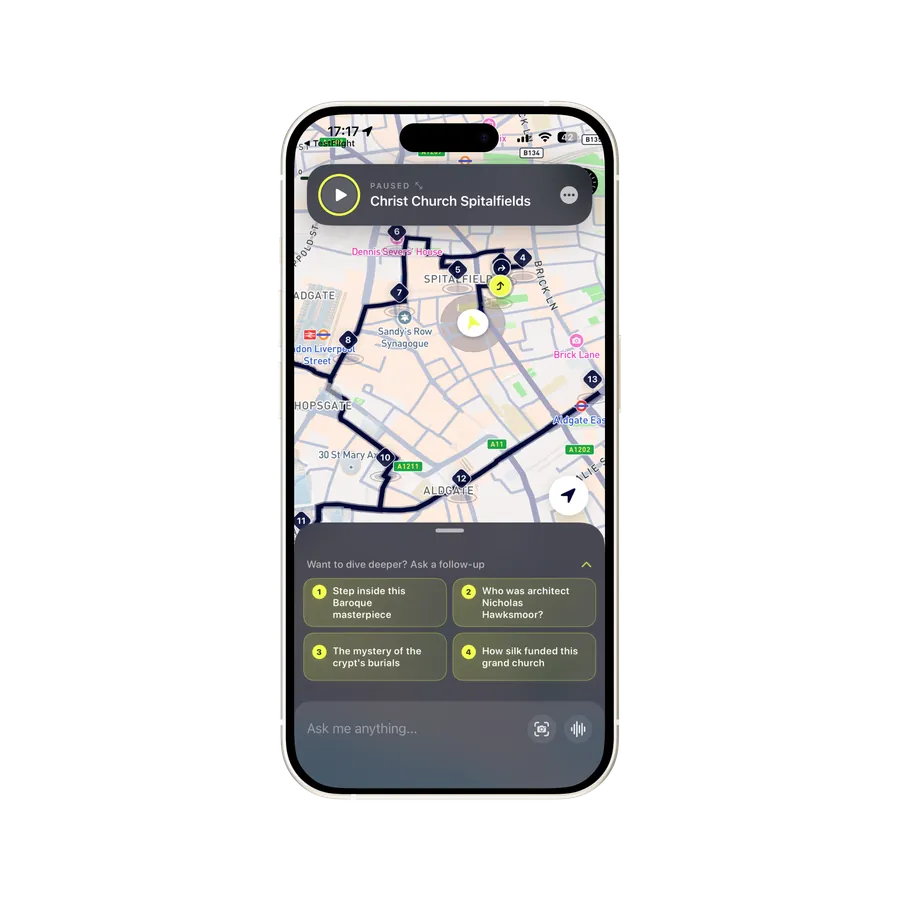
Hear the story as you walk.

The 13th-century Ribera merchants' rise, the 1329-1383 building of Santa Maria del Mar by guild labourers, the 1391 pogrom, the Renaissance and Baroque centuries, the catastrophic 11 September 1714 fall to Philippe V, the demolition of half the quarter for the Ciutadella citadel, the 1872 citadel demolition and rebuilding, the 1876 Mercat del Born, the 1908 Palau de la Música, the 1934-39 anarchist period, the 2013 Born Centre Cultural opening, the gentrification of the 2000s.

iWander on-demand AI guide

03

Ask anything along the way.

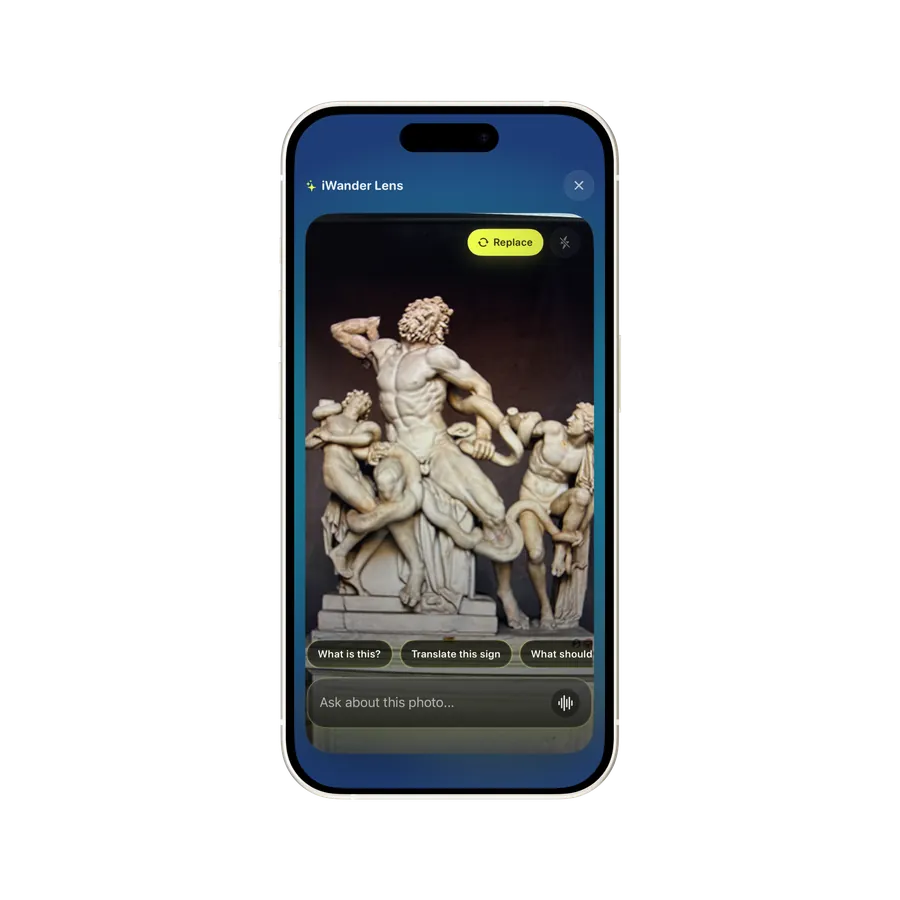
How was Santa Maria del Mar built so fast? What's a Catalan Gothic nave? Which guild lived on Carrer Argenteria? Where's the best vermouth? Point your camera, ask out loud, or type. Your guide answers in seconds.

Works offline · 9 voiced languages · 30 free minutes on signup

What makes it worth walking

The medieval merchants' quarter that was half-demolished in 1714 and rebuilt twice

El Born is the small slice of medieval Barcelona that is most worth slow walking. The neighbourhood preserves the densest collection of medieval secular architecture in the city (Carrer Montcada), the masterpiece of Catalan Gothic ecclesiastical building (Santa Maria del Mar), the exposed ground-plan of a city violently destroyed in 1714 (under the Mercat del Born), and the Modernista masterpiece (Palau de la Música) just to the north. Within 500 metres you can read 800 years of Barcelona's history almost in chronological order. The neighbourhood is also one of the most gentrified in central Barcelona - the tapas bars, design boutiques and design hotels are pleasant; the strain on the original residents is real. Walk it knowing both layers.

The medieval Ribera

The Ribera ("riverside") was the quarter that grew up east of the Roman walls from the 12th century onwards. The terrain was originally salt marsh and beach - the medieval shoreline ran along the line of today's Passeig del Born. As the marsh was filled in through the 12th-13th centuries, the new neighbourhood became Barcelona's merchant and craftsman quarter. The Counts of Barcelona had moved their capital here from Girona in the 9th century; the city was the trading powerhouse of the western Mediterranean from the 13th century onwards (the Crown of Aragon controlled Sardinia, Sicily, parts of Greece, parts of North Africa). The Ribera was where the wool, textile, leather, silver, glass, and shipbuilding guilds set up workshops.

The medieval street pattern still exists. The streets are named for the guilds: Carrer de l'Argenteria (silversmiths), Carrer dels Sombrerers (hat-makers), Carrer dels Mirallers (mirror-makers), Carrer dels Banys Vells (old baths), Carrer dels Esparters (basket-weavers), Carrer dels Flassaders (blanket-makers), Carrer de la Vidrieria (glass-makers). The richer merchants and minor nobility lived on Carrer Montcada - the wide street where the Gothic palaces survive. Today five of those palaces house the Picasso Museum.

Santa Maria del Mar

The merchant guilds funded the building of Santa Maria del Mar 1329-1383 - the "cathedral of the sea" - on the supposed burial site of Saint Eulàlia. The construction was extraordinarily fast for a Gothic cathedral: 54 years total. The structure is the purest expression of Catalan Gothic in Barcelona - a single soaring nave with three aisles of almost-equal height, eight massive octagonal columns spaced 13 metres apart, 14th-century stained glass at the apse, a surprisingly austere interior. The Catalan Gothic style differs from French Gothic by emphasising horizontal mass, wide naves, and structural openness rather than vertical thrust and rib-vault ornament.

The basilica was built almost entirely by Ribera labourers - the porters carried the stone from the Montjuïc quarry on their backs (the relief above the side door shows them). The 1428 earthquake damaged the rose window, which was rebuilt 1459-1460. The 1714 War destroyed surrounding buildings but left the basilica standing. The 1714 destruction is commemorated outside the basilica - the Fossar de les Moreres is the small memorial square where Barcelona's 1714 defenders are buried; an eternal flame burns at the centre, with a Catalan-nationalist plaque.

The basilica was nearly destroyed in 1936. At the start of the Spanish Civil War, anarchists arson-attacked Santa Maria del Mar - the fire burned for 11 days, destroying the baroque interior (the gold leaf, the silver lamps, the painted decoration), the high altar, most of the carved choir, the organ. What survived was the medieval stone bones. The 1960s restoration left the basilica as you see it now - austere, almost empty inside, the stone showing through. The architectural purist's preference. Free entry for prayer 09:00-13:00 and 17:00-20:30; €10 for the roof + crypt guided visit.

The 11 September 1714 catastrophe

The War of the Spanish Succession (1701-1714) was the disaster that ended medieval Catalonia. The competing claimants to the Spanish throne after the death of Carlos II were the Bourbon Philippe (grandson of Louis XIV of France) and the Habsburg Archduke Charles. Catalonia, like much of the Crown of Aragon, backed the Habsburg claimant - partly out of antipathy to French centralising rule, partly out of loyalty to the older constitutional system that respected Catalan privileges. Britain initially supported the Habsburg side but abandoned the alliance in 1713 after the Treaty of Utrecht.

Catalonia fought on alone. After a 14-month siege Barcelona fell to the Bourbon army on 11 September 1714. The consequences were severe: Philippe V abolished the Generalitat (the Catalan parliament), banned the Catalan language in official use, abolished the Catalan currency, and imposed direct Castilian rule. Most consequentially for El Born, the Bourbon army built a vast new citadel (the Ciutadella) on the eastern edge of the medieval city - a 12-hectare fortress, the largest in Europe at the time, deliberately positioned to threaten the rebellious city.

Building the citadel required demolishing half of the Ribera neighbourhood. About 1,200 houses, several churches, the convents, the workshops, the docks were razed to the ground in 1715-1717. The displaced families were not compensated. Some moved to other parts of the city; many simply lost everything. The southern half of Ribera disappeared. The Mercat del Born sits on the boundary - the line of the demolition. What you see when you look down into the excavated ruins under the market is that exact moment, frozen: the foundations of houses, taverns, workshops, drainage systems, wine cellars, all stopped at 1715. 11 September - "La Diada" - is Catalonia's national day, marking the 1714 defeat. Catalan was recovered slowly through the 19th century (the Renaixença movement), and the Generalitat was re-established in 1932 under the Second Republic. Franco abolished it again in 1939; it was re-established for the third time after Franco's death in 1977.

The Ciutadella and the 1872 demolition

The Ciutadella fortress dominated Barcelona for 150 years. The fortress was deeply unpopular - both as the daily reminder of the 1714 humiliation and as the obstacle to the city's eastern expansion. In 1841 General Espartero ordered the fortress demolished after a revolt; it was rebuilt within years. In 1869 the Provisional Government of revolution finally permitted the demolition. The site was given to the city, which converted it into the Parc de la Ciutadella - the city's first major public park - in time for the 1888 Universal Exposition. The Parliament of Catalonia now meets in the only major Ciutadella building that was preserved (the old arsenal).

The Mercat del Born was built 1873-1876 by Josep Fontserè (under the engineer Josep Cornet i Mas) as part of the post-Ciutadella reconstruction - the new market for the rebuilt eastern half of Ribera. The structure was the largest covered iron-and-glass building in Europe at its opening, with a 32-metre dome. It functioned as Barcelona's wholesale food market until 1971, when the operation moved to Mercabarna in the Zona Franca. The structure was then abandoned for 30 years. The 2002 restoration project unexpectedly uncovered the demolished 1714-1715 Ribera underneath - which transformed the project from a library (the original plan) into a cultural centre exposing the ruins. The Born Centre Cultural i de Memòria opened 11 September 2013.

The Picasso Museum and Carrer Montcada

Pablo Picasso lived in Barcelona 1895-1904 - the formative years from age 13 to 22, when his family moved here from Málaga. He attended the La Llotja art school (just north of El Born), painted his first major works, met the friends who would shape his early career (Jaume Sabartés, Jaime Andreu Bonsons, the Quatre Gats circle). After Paris took him in 1904, he visited Barcelona regularly. In 1960 he proposed to the city to donate his personal collection of his Barcelona-period work; the city offered him the Palau Aguilar on Carrer Montcada, and over the years acquired four adjacent medieval palaces (Palau del Baró de Castellet, Palau Meca, Casa Mauri, Palau Finestres) to expand the museum.

The 4,251-work permanent collection is the most comprehensive Picasso collection from his early years: the boy paintings (1893-1895), the academic-realist Barcelona work (1895-1900), the Blue Period beginnings (1900-1904), and the celebrated 1957 "Las Meninas" series (58 paintings systematically reinterpreting Velázquez's masterpiece). Less of the famous Cubist and post-Cubist work - that's mainly at MoMA, the Reina Sofía, the Musée Picasso in Paris. The palaces themselves are worth the visit alone - the medieval courtyards, the carved coats of arms, the Gothic doorways, the 15th-century beamed ceilings preserved through the conversion.

The Palau de la Música

The Palau de la Música Catalana - on Carrer Palau de la Música 4-6, two blocks north of Santa Maria del Mar - is Lluís Domènech i Montaner's 1905-1908 concert hall, the masterpiece of Catalan Modernisme alongside Hospital de Sant Pau. Built for the Orfeó Català - the choral society founded 1891 as a cultural-nationalist project to recover and promote Catalan folk and choral music after Franco-style centralisation efforts. The Palau was funded by public subscription (mostly Catalan middle-class donors).

The interior is the most spectacular in Catalan Modernisme architecture. The auditorium uses natural daylight - the only concert hall in Europe with natural illumination - through a giant inverted-stained-glass dome above the stage. 18 mosaic muse-sculptures by Eusebi Arnau line the stage backdrop. The auditorium ceiling is a stained-glass sky. The exterior is more austere but the corner sculpture (Miguel Blay's "La Música Catalana" - representing the nation singing its own song) is one of the iconic Modernista sculptures. UNESCO-listed 1997.

The concert programme is full year-round (classical, choral, occasional flamenco and jazz). Guided tour €23, 50 minutes, hourly English. Concert tickets €15-€80 - the better way to experience the hall.

Questions

Frequently asked

El Born is the colloquial name for the southern half of the La Ribera medieval quarter - the small district between the Gothic Quarter (across Via Laietana) and Parc de la Ciutadella, with Passeig del Born as its central artery. La Ribera was the medieval merchants' quarter; the southern half (today's El Born) was forcibly demolished after the 1714 fall of Barcelona and rebuilt 1872 onwards.
A full walk - Santa Maria del Mar, Carrer Montcada, Mercat del Born, Passeig del Born, Palau de la Música, Parc de la Ciutadella edge - takes 3 hours. A focused walk (Santa Maria del Mar + Picasso Museum + Mercat del Born) is 2 hours. The neighbourhood is small (around 500 metres across) and entirely flat.
The "cathedral of the sea" - the masterpiece of Catalan Gothic, built 1329-1383 by the merchant guilds. Single soaring nave with three aisles of almost-equal height, eight massive 13-metre-spaced octagonal columns, austere interior (the baroque overlay was destroyed in the 1936 anarchist arson). Built almost entirely by Ribera labourers in 54 years - exceptionally fast for a Gothic cathedral. Free 09:00-13:00 + 17:00-20:30; €10 guided.
Plaça Comercial 12. The neighbourhood market 1876-1971, then closed for 30 years. The 2002 restoration excavation exposed extensive demolished pre-1714 Ribera buildings underneath - houses, streets, taverns, workshops, all preserved at the moment of 1714. Reopened 2013 as a cultural centre. Free general entry; €6 archaeological visit.
Carrer Montcada 15-23 - five connected medieval stone palaces (13th-15th centuries) housing Picasso's official Barcelona museum. 4,251 works focusing on Picasso's Barcelona years (1895-1904) plus the 1957 Las Meninas series. €15 ticket (free Thursday evenings and the first Sunday of each month). Tuesday-Sunday 09:00-19:30.
Carrer Palau de la Música 4-6. Lluís Domènech i Montaner's 1905-1908 concert hall - masterpiece of Catalan Modernisme. UNESCO-listed 1997. The auditorium has the inverted stained-glass dome above the stage - the only concert hall in Europe with natural daylight illumination. Tour €23, 50 minutes. Concert tickets €15-€80.
The medieval merchants' street - 200 metres of 13th-15th century Gothic palaces, running from Plaça de l'Àngel south to Passeig del Born. The Ribera quarter's richest merchants and minor nobility lived here. Some of the Catalan-Gothic palaces are the best-preserved domestic architecture of the era in Europe. Five of them now house the Picasso Museum.
The central tree-lined promenade of El Born, between Santa Maria del Mar (south end) and the Mercat del Born (north end). In medieval times the site of tournaments and jousts - "born" means "jousting enclosure" in old Catalan. Today the focus of El Born's eating-and-drinking life: pavement cafés, vermouth bars, restaurants.
Metro: Jaume I (Line 4) on Via Laietana - western entry. Barceloneta (Line 4) - southern entry. Arc de Triomf (Line 1) - northern entry. From Barcelona airport: Aerobús to Plaça de Catalunya then walk south 10 minutes, or R2 Nord train to Estació de França (32 min, €4.90).

How to find it

Getting to El Born

District
Ciutat Vella (Old City) / La Ribera · postal code 08003
Nearest metro
Jaume I (L4, yellow) on Via Laietana - western entry; Barceloneta (L4) - south; Arc de Triomf (L1) - north; Urquinaona (L1, L4) - north-west
From Barcelona airport (BCN)
R2 Nord train to Estació de França (32 min) · €4.90. Or Aerobús to Plaça de Catalunya (35 min) · €7.25, then walk 10 min south
From Girona airport (GRO)
Sagalés bus to Estació del Nord (75 min) · €17. Walking distance into El Born.
Best season
April-June and September-October. Summer hot. December good - Christmas markets at Santa Maria del Mar and Plaça de l'Àngel
When to walk
Santa Maria del Mar free 09:00-13:00 + 17:00-20:30. Mercat del Born 10:00-20:00. Picasso Museum Tue-Sun 09-19:30. Passeig del Born best evenings 19:00 onwards. Carrer Montcada quietest mornings before 11

The headline sights

Three landmarks to anchor your walk

Pull the audio walk around any of these and the rest of El Born falls into place.

Santa Maria del Mar

Plaça de Santa Maria 1. The masterpiece of Catalan Gothic - 1329-1383, built by the Ribera merchant guilds. Single soaring nave with three aisles of almost-equal height; eight 13-metre-spaced octagonal columns; austere interior (the baroque overlay was destroyed in the 1936 anarchist arson). Free 09:00-13:00 + 17:00-20:30; €10 for the roof + crypt guided visit. Sunday 11:30 mass for the building in use.

Walk Santa Maria del Mar

Mercat del Born (Born Centre Cultural)

Plaça Comercial 12. The 1873-76 iron-and-glass market structure (the largest covered building in Europe at its opening) restored 2013 as a cultural centre exposing the demolished pre-1714 Ribera underneath. Walk into the free covered space and look down at the entire excavated city. €6 archaeological visit with audio guide. Permanent exhibition on Barcelona pre-1714.

Walk the Mercat

Picasso Museum + Carrer Montcada

Carrer Montcada 15-23. Five connected medieval stone palaces (13th-15th centuries) housing 4,251 works of Picasso - the most comprehensive collection of his Barcelona years (1895-1904) plus the celebrated 1957 Las Meninas series. €15 ticket; free Thursday evenings and the first Sunday of each month. Tuesday-Sunday 09:00-19:30. The palaces themselves are worth the visit.

Walk the Picasso Museum

Other Barcelona neighbourhoods to wander

Walk somewhere else in Barcelona

Build any El Born walk you want.

Tell us a theme, a question, a vibe - Santa Maria del Mar with the cathedral of the sea, the Mercat del Born ruins, the Picasso Museum, the Palau de la Música, a vermouth and pintxos crawl - and your walk is ready in 30 seconds.

Get the iWander app

30 free minutes on signup · Subscriptions from $10/mo · Cancel anytime

Updated 20 May 2026 by the iWander local team · Curated for accuracy