AboutEnterprise solutionsGet the app
Free walking tour · Saint-Germain-des-Prés · Paris

Walk Saint-Germain,
your way.

Free Saint-Germain-des-Prés walking tour - Flore, Deux Magots, the abbey, Luxembourg, in 30 seconds

Your free walking tour of the Left Bank quarter that Sartre, Beauvoir, Hemingway and Picasso made theirs - and that still does its old job better than anywhere in Paris. Pick a ready-made walk below or tell us a theme and your audio tour is ready in 30 seconds. Works offline, 9 voiced languages, 30 free minutes on signup.

Or pick your walk

Local knowledge

What we'd tell you on day one

Six things that change how you walk Saint-Germain.

01

Coffee on the terrace is the cover charge.

Locals know that Café de Flore and Les Deux Magots are tourist-priced and don't go there to drink coffee - they go to be seen, briefly, on the way somewhere else. The €8 espresso is the cover charge for the pavement seat and the 90-year-old waiter in his long white apron. Sit. Watch. Leave after one. Then walk three blocks west and have a €3 espresso at Au Petit Suisse facing the Luxembourg.

02

The abbey is free and most people skip it.

The 6th-century abbey of Saint-Germain-des-Prés stands directly in front of Café de Flore. The Romanesque tower is the oldest in Paris (around 1000 AD). The interior is free, open every day, and rarely has a queue. The Flandrin frescoes in the nave, the rare Romanesque capitals in the choir, and Descartes's tomb in the Salle des reliques are all there. Ten minutes - more if there's a free organ recital, which there often is.

03

Saint-Sulpice is bigger than Notre-Dame.

Just three blocks south. Paris's second-largest church (only Notre-Dame is bigger). The two unfinished towers, the Delacroix murals in the first chapel on the right (Jacob Wrestling with the Angel, the painter's last work), the gnomon (the astronomical brass line that became a Da Vinci Code obsession), and a four-organ church that hosts concerts most Sundays. Free. Open 08:00-19:45.

04

Luxembourg has a side entrance most miss.

The most-used entrance is the grand gates on Boulevard Saint-Michel. The most-loved one is the small gate at Rue de Vaugirard / Rue Guynemer - it puts you directly above the basin and gives you the postcard view as you walk down the steps. The Medici Fountain is in the north-east corner (often missed); it's a grotto with a Polyphemus statue, framed by plane trees and a long pool.

05

Mondays and Tuesdays are quieter.

The Luxembourg Senate doesn't open the gardens any later, but the boutiques and antique galleries on the Carré Rive Gauche tend to open Tuesday-Saturday. Mondays the cafés are open as usual but the boutiques aren't; Tuesdays everything is on. Sunday is the brunch day - busy on the famous terraces, but the side streets are calmer than the Marais two miles east.

06

The 6th is a 15-minute neighbourhood.

It looks bigger on the map than it is. The abbey to Saint-Sulpice is five minutes. Saint-Sulpice to the Luxembourg is three. The Luxembourg to the Pont des Arts is fifteen. You can do the whole arrondissement in 90 minutes of walking; add a real lunch and a coffee, and it's a perfect day. Don't overplan - the pleasure here is in the side streets, not the milestones.

How it works

How iWander walks Saint-Germain with you.

Three things, in 30 seconds.

iWander home screen

01

Type your walk.

Any street, theme or vibe. "Flore and Deux Magots", "existentialist Paris", "Luxembourg basin", "Saint-Sulpice", "Carré Rive Gauche", "Hemingway's Paris". iWander writes you the walk in 30 seconds.

iWander audio walk in progress

02

Hear the story as you walk.

King Childebert founding the abbey in 543, the medieval pre-fair on the prés (meadows), Voltaire and Rousseau at the Procope, Marie de' Medici's homesick Florentine palace, Hemingway hunting pigeons in the Luxembourg, Sartre and Beauvoir writing through the cold winters at Flore.

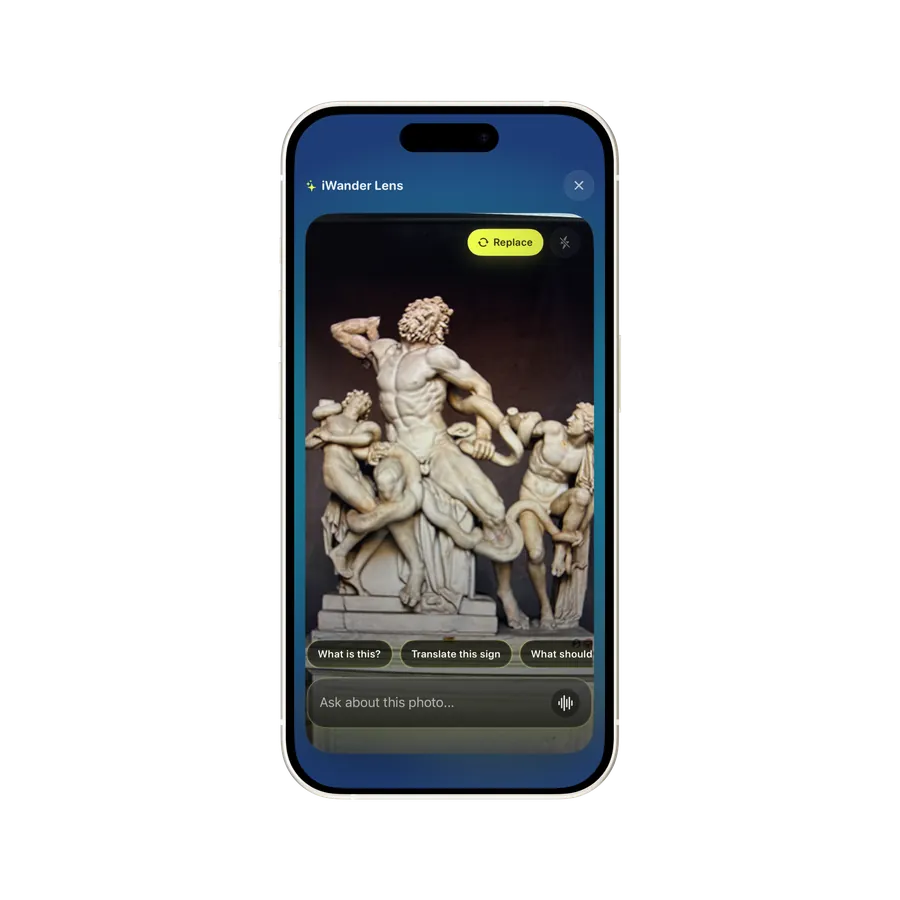
iWander on-demand AI guide

03

Ask anything along the way.

Who lived here? Whose statue? What's that fountain? Point your camera, ask out loud, or type. Your guide answers in seconds.

Works offline · 9 voiced languages · 30 free minutes on signup

What makes it worth walking

An abbey, two cafés and a generation that wouldn't leave

Saint-Germain-des-Prés is named for an abbey that nobody alive has seen in its prime. The thing standing today on Place Saint-Germain - a single tower and an aisled nave - is the surviving ten percent of a vast Benedictine monastery that for a thousand years was one of the richest religious institutions in northern Europe. The quarter around the abbey carries that long shadow: aristocratic to its bones, but also stubbornly intellectual, café-loving, slightly louche, and obsessed with the idea that a small group of clever people talking in the right place can change the world. Sometimes - on the post-war evidence - they do.

From meadow to monastery to fair

The abbey was founded in 543 by King Childebert I, son of Clovis. It was originally outside the city walls in the prés - the meadows - which is where the name comes from. By the year 1000 the Romanesque tower was up. By the 12th century the abbey owned everything south of the Seine you can see from the Pont Royal. From 1175, the abbey hosted the great Foire Saint-Germain - a six-week medieval trade fair that drew merchants from across Europe and laid the commercial DNA of the Left Bank.

The French Revolution dismantled the monastery. Most of the cloister and refectory were demolished; the abbey church barely survived. Through the 19th century the area filled with bookshops, art galleries and small printing houses - the Latin Quarter to its east already attracted the university student trade, but Saint-Germain became the address for the publishers (Gallimard, Hachette, Le Seuil), the antique dealers and the painters' studios.

The post-war moment

By 1945 a generation of writers and musicians had made Saint-Germain their daytime office and night-time playground. Jean-Paul Sartre and Simone de Beauvoir wrote at Café de Flore - the cafés' heating worked when their apartments' didn't. Albert Camus had his Gallimard office at 5 Rue Sébastien-Bottin (now Rue Gaston-Gallimard). Boris Vian wrote, played trumpet, and partied; Juliette Greco sang; Sidney Bechet blew soprano sax in the basement of Le Tabou on Rue Dauphine and the Caveau de la Huchette across the river. James Baldwin moved here from Harlem in 1948 and wrote Giovanni's Room in part at the Deux Magots.

It was the postwar moment - the GIs were gone, France was rebuilding, the ideas of existentialism, anti-colonialism and modernism were all percolating. The two famous cafés - founded much earlier but cresting in this period - were where it all happened in public. Flore was bigger and louder; Deux Magots was the more bourgeois choice. Brasserie Lipp, across the boulevard, was where politicians went. Procope, six blocks away on Rue de l'Ancienne-Comédie - the oldest café in Paris, opened in 1686 - kept its 18th-century clientele's ghosts in tow.

The Luxembourg, which sits inside the picture

Marie de' Medici, Henri IV's widow, was homesick for the Pitti Palace in Florence. In 1611 she bought the Hôtel du Luxembourg and the surrounding fields and commissioned a new palace - the Palais du Luxembourg - in a deliberately Florentine style. The 25-hectare garden, formal in the French manner with a long basin and a circuit of plane trees, was laid out around it. Today the palace is the seat of the French Senate; the garden is the most-loved public park on the Left Bank.

The Luxembourg is a working park. Children sail toy boats they rent on the central basin; pensioners play chess in the south-east corner; tennis courts on the west side host casual matches; an orchard preserves heirloom varieties; bees from the apiary make Luxembourg honey, sold once a year in October. The Medici Fountain - a grotto-style fountain Marie commissioned in 1630 - hides in the north-east corner: a long pool flanked by plane trees, a Polyphemus statue at the back. Hemingway wrote in A Moveable Feast that when he was broke he came here to catch pigeons for dinner; the museum next door (Musée du Luxembourg) hosts the city's best small temporary art shows.

What's left, what's still alive

Walk Saint-Germain in 2026 and what strikes you is how much of the legend is still working. The Flore is still busy at 10 in the morning with Le Monde readers. The Deux Magots still has its two Chinese-figurine "magots" on the central column. Saint-Sulpice still runs free organ recitals on Sunday evenings. The antique galleries on the Carré Rive Gauche still wrap brown paper around your purchase. The Gallimard offices on Rue Gaston-Gallimard still publish the books most people read this year. The Luxembourg's chairs are still the green steel ones, scattered everywhere, free to drag wherever you like. It is an unusually unbroken quarter.


Questions

Frequently asked

A full Saint-Germain-des-Prés walk - the abbey church, the literary cafés on Place Saint-Germain, Saint-Sulpice, the antique galleries on Rue Bonaparte and Rue de Seine, ending in the Jardin du Luxembourg - is 2 to 2.5 hours at a relaxed pace. A focused walk (just the literary cafés, or just the antique quarter, or just the Luxembourg) is 45-75 minutes.
Yes if you understand the trade. Both are tourist-priced (€7-8 for a coffee, €10+ for a Croque-Monsieur) and both are unapologetic about it - they trade on their legend. Picasso, Hemingway, Sartre, Beauvoir, Camus, Baldwin all worked at one or the other. The drinks are average; the people-watching from the pavement terrace is unmatched. Sit on the Café de Flore upstairs in winter (it's quieter), Deux Magots ground-floor terrace in summer. Don't expect a meal - go for coffee or a glass of wine.
One of the oldest churches in Paris, founded in 543 AD by King Childebert I. The current Romanesque tower dates from around 1000 AD - making it the oldest standing church tower in the city. Free to enter, open daily. The choir and apse have rare Romanesque capitals; the nave has 19th-century Flandrin frescoes; the small Salle des reliques holds the tomb of philosopher René Descartes. A major 2024 restoration finished the walls and reopened the side chapels.
The 25-hectare formal park stretching south from the Senate (Palais du Luxembourg, where Marie de' Medici lived from 1625). Free, open from 07:30 (summer) or 08:15 (winter) to dusk. The big basin where children sail toy boats, the Medici Fountain (a grotto-fountain from 1630), 106 statues, an apiary, a chess area, and a quiet open-air orchard.
In the post-war 1940s and 1950s Sartre, Beauvoir, Camus, Cocteau, Boris Vian, Greco and Sidney Bechet made Saint-Germain Paris's intellectual and musical centre. Sartre and Beauvoir wrote at Café de Flore daily (the heating worked when their apartments' didn't). The cellar jazz clubs - Le Tabou on Rue Dauphine, Caveau de la Huchette - ran all night.
Yes - the 6th arrondissement is one of Paris's most expensive postcodes. Hotels are 30-40% pricier than the Latin Quarter next door for similar rooms. Cafés cost €7-8 for an espresso on the famous terraces, €4-5 a block away. But museums (Musée Delacroix, Musée de Cluny next door, Musée du Luxembourg) are inexpensive, the abbey is free, and the Luxembourg gardens are free; you can spend a beautiful afternoon here for the cost of a coffee.
Métro: Saint-Germain-des-Prés (line 4) drops you on Boulevard Saint-Germain in front of the abbey. Mabillon (line 10) is two minutes east. Odéon (lines 4 and 10) covers the eastern edge by the Latin Quarter. For the Luxembourg end, take RER B to Luxembourg or métro 4 to Saint-Sulpice. From CDG, RER B to Saint-Michel-Notre-Dame, then 10-minute walk west, about €12.
Yes. Download a walk over Wi-Fi at your hotel before you head out. French SIMs (Orange, Free Mobile) are cheap and 4G coverage is excellent across central Paris. iWander runs entirely on-device once downloaded.

How to find it

Getting to Saint-Germain-des-Prés

Arrondissement
6th (Left Bank, west of Latin Quarter)
Nearest métro
Saint-Germain-des-Prés (4), Mabillon (10), Odéon (4, 10), Saint-Sulpice (4), Rennes (12)
From CDG airport
RER B to Saint-Michel-Notre-Dame (35 min), 10-min walk west · about €12
From Orly
Orlyval + RER B to Saint-Michel-Notre-Dame (40 min) · about €15
Best season
April-June (chestnuts in flower in the Luxembourg) and September-October. August quiet because locals leave
When to walk
Abbey at 09:00. Cafés at 11:00. Luxembourg before 14:00. Antique galleries 11:00-13:00 and 15:00-19:00 Tue-Sat.

The headline sights

Three landmarks to anchor your walk

Pull the audio walk around any of these and the rest of the 6th falls into place.

The Abbey Church

Founded 543, current tower around 1000 AD - Paris's oldest. Free, open every day. The Flandrin frescoes, the rare Romanesque capitals, and Descartes's tomb are inside. Free organ recitals most Sundays at 18:00. Look up the day's schedule on the door.

Walk the abbey

Café de Flore

172 Boulevard Saint-Germain. Founded 1887. Picasso, Apollinaire, Sartre, Beauvoir, Camus, Baldwin, Pagnol, Truffaut all wrote here at one time or another. Open 07:30 till 01:30. Coffee on the pavement terrace is €8 and worth it for the seat. The first-floor salon is quieter in winter.

Walk the cafés

Jardin du Luxembourg

The 25-hectare Senate-owned park five minutes south of the abbey. Free, open from 07:30 (summer) or 08:15 (winter) to dusk. Children's basin, Medici Fountain, 106 statues, chess players, an apiary, a tennis club. The most-loved garden in Paris.

Walk the Luxembourg

Other Paris neighbourhoods to wander

Walk somewhere else in Paris

Build any Saint-Germain walk you want.

Tell us a theme, a question, a vibe - Sartre, the abbey, the Luxembourg, a Hemingway hour, antiques on Rue Bonaparte - and your walk is ready in 30 seconds.

Get the iWander app

30 free minutes on signup · Subscriptions from $10/mo · Cancel anytime

Updated 19 May 2026 by the iWander local team · Curated for accuracy